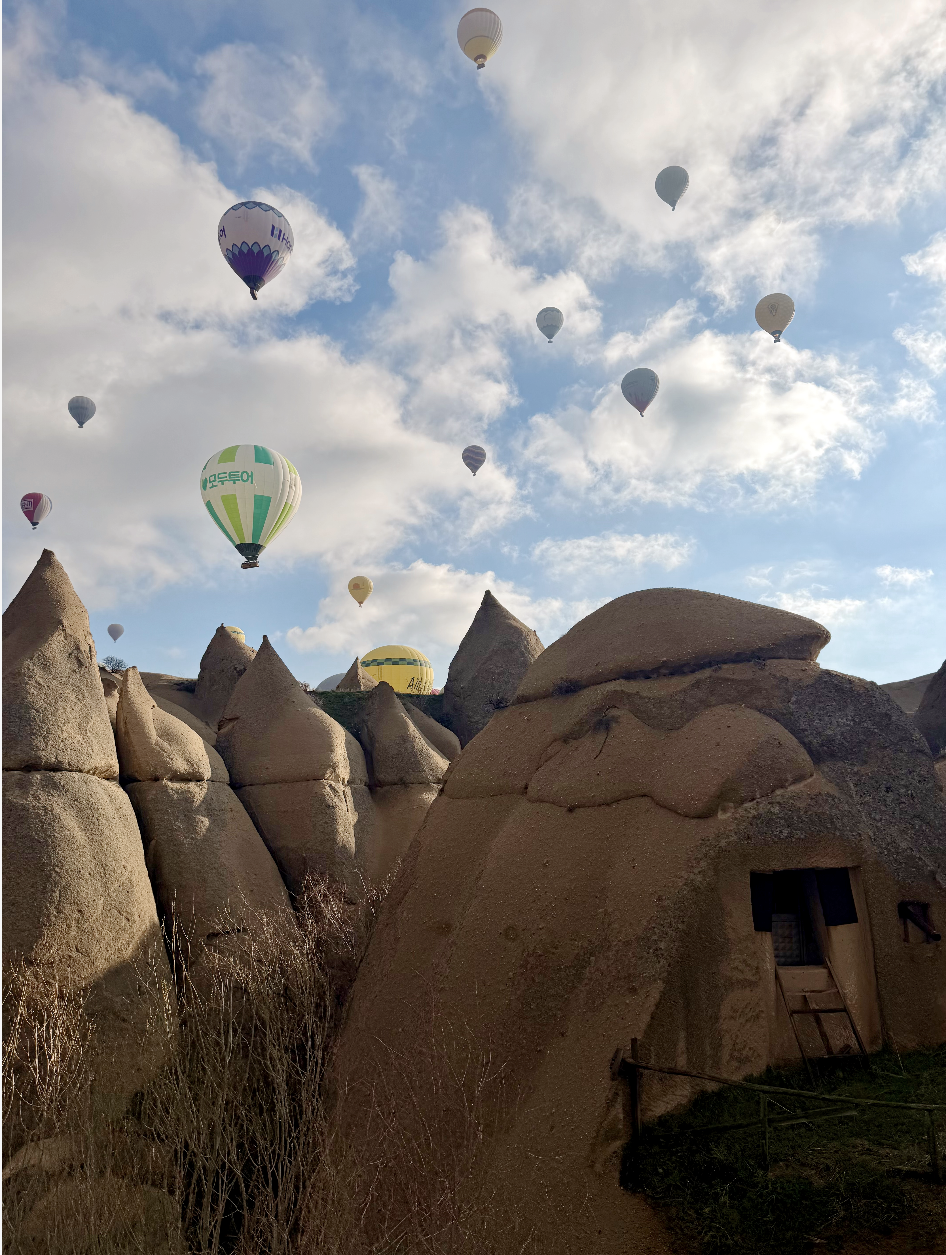
Türkiye is one of those places that reveals itself slowly, and Cappadocia is where that experience comes fully into focus. Most travelers base themselves in Göreme, staying in cave hotels carved directly into the rock, waking up before sunrise to watch hot air balloons drift across the valley sky. It sounds almost staged when you say it out loud, but in person it feels completely different.
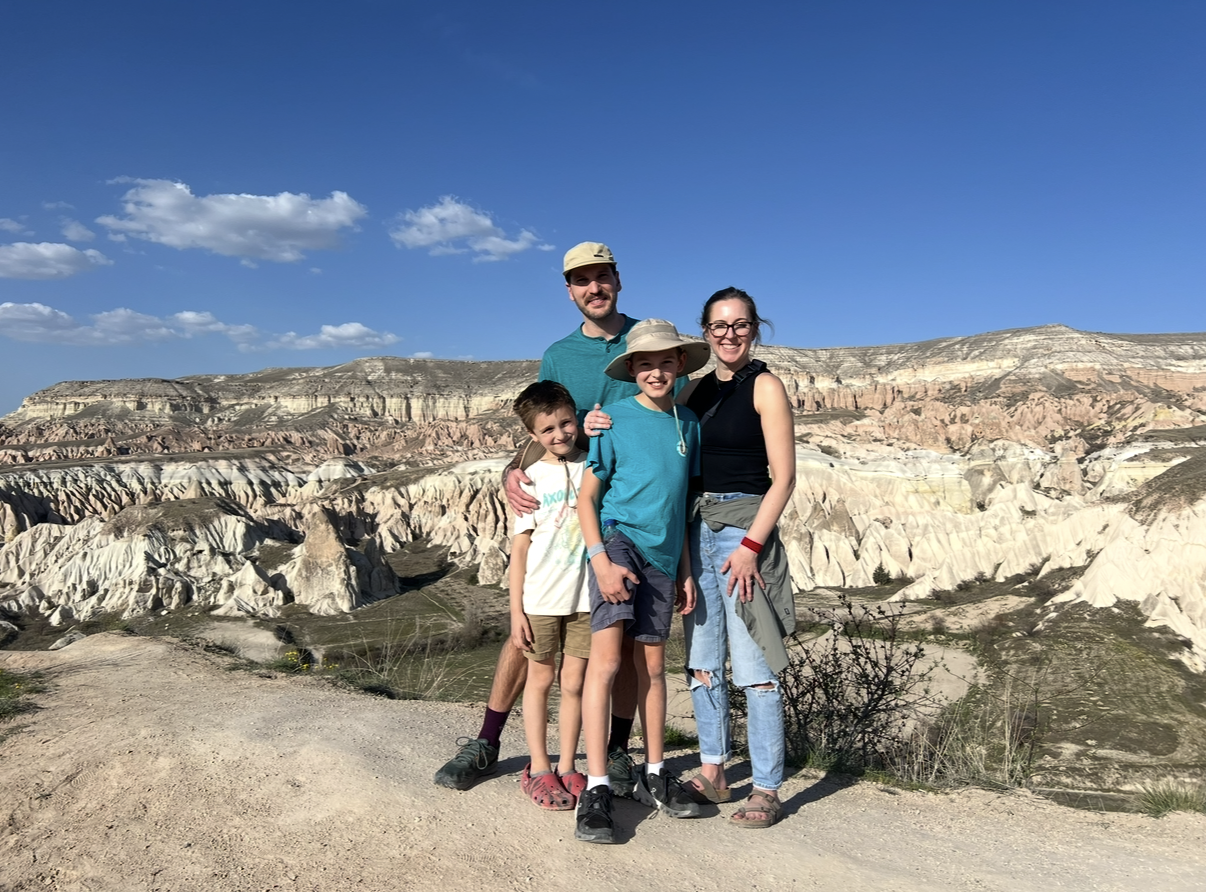
We’ve now experienced Cappadocia twice, both times rooted in Göreme. The first was a scouting trip with our two young sons through Land + See Tours, and the second was a return journey with a small group of eight. Each time, the same landscape felt slightly different, shaped not just by where we stayed, but by how we chose to move through it. Göreme became more than a base. It became the lens through which we understood the entire region.
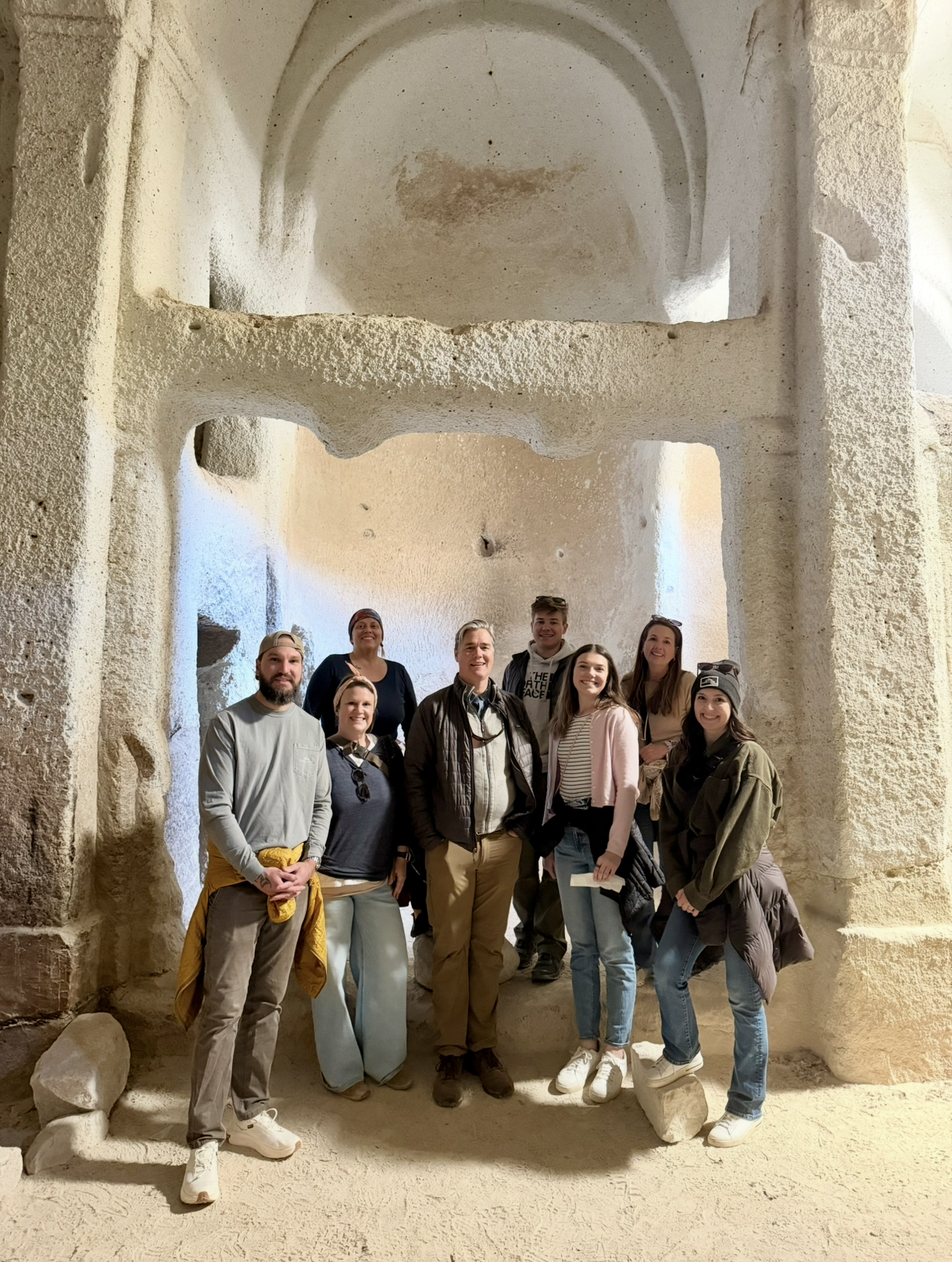
When we returned, we had originally planned to travel as a group of 19. In the end, 8 of us made the journey, as circumstances in the broader region led some to reconsider travel at that time. What remained was a smaller group, and that shift quietly changed the rhythm of the experience. It felt more connected, more flexible, and in many ways, more personal.
At first, Cappadocia can feel a little too polished. Busy streets, shopkeepers calling out, rows of souvenirs that all start to blur together. It would be easy to leave thinking it’s just another destination built for tourism. But if you give it a little more time, if you’re intentional about how you move through it, something shifts. You start to notice the quieter corners, the warmth of the people, the meals that linger a little longer than expected, and a landscape that doesn’t quite feel real. It sneaks up on you in the best way.
A quick note because this confused us at first. Cappadocia isn’t a town, it’s an entire region. When you’re planning your trip, you’ll either fly into Nevşehir, which is about 45 minutes from Göreme, or Kayseri, which is a bit farther but sometimes easier for flights. If you try to search “Cappadocia” on a map or weather app, it won’t show up as a single place. It’s more like Jackson Hole, a collection of towns spread across a shared landscape.
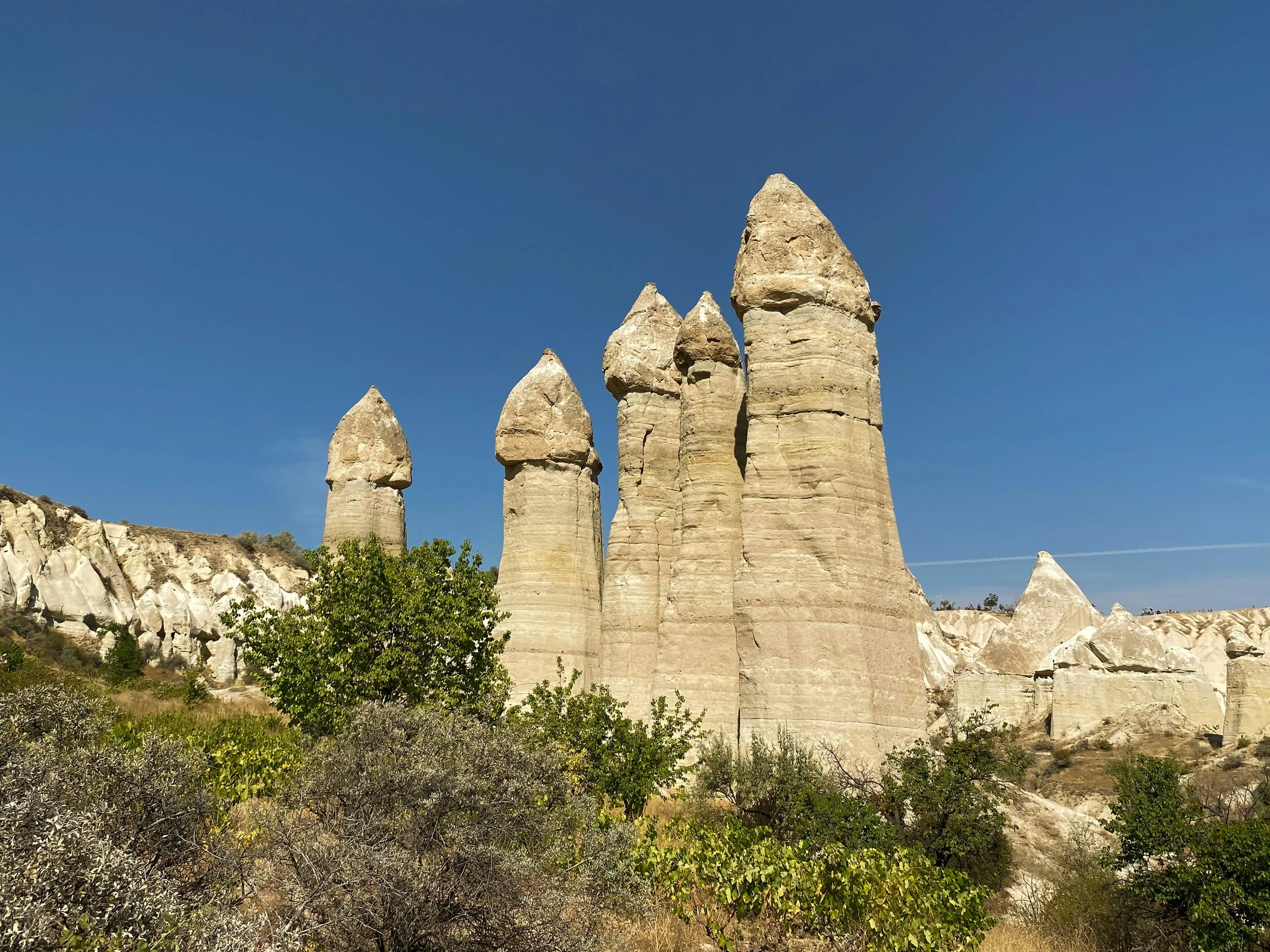
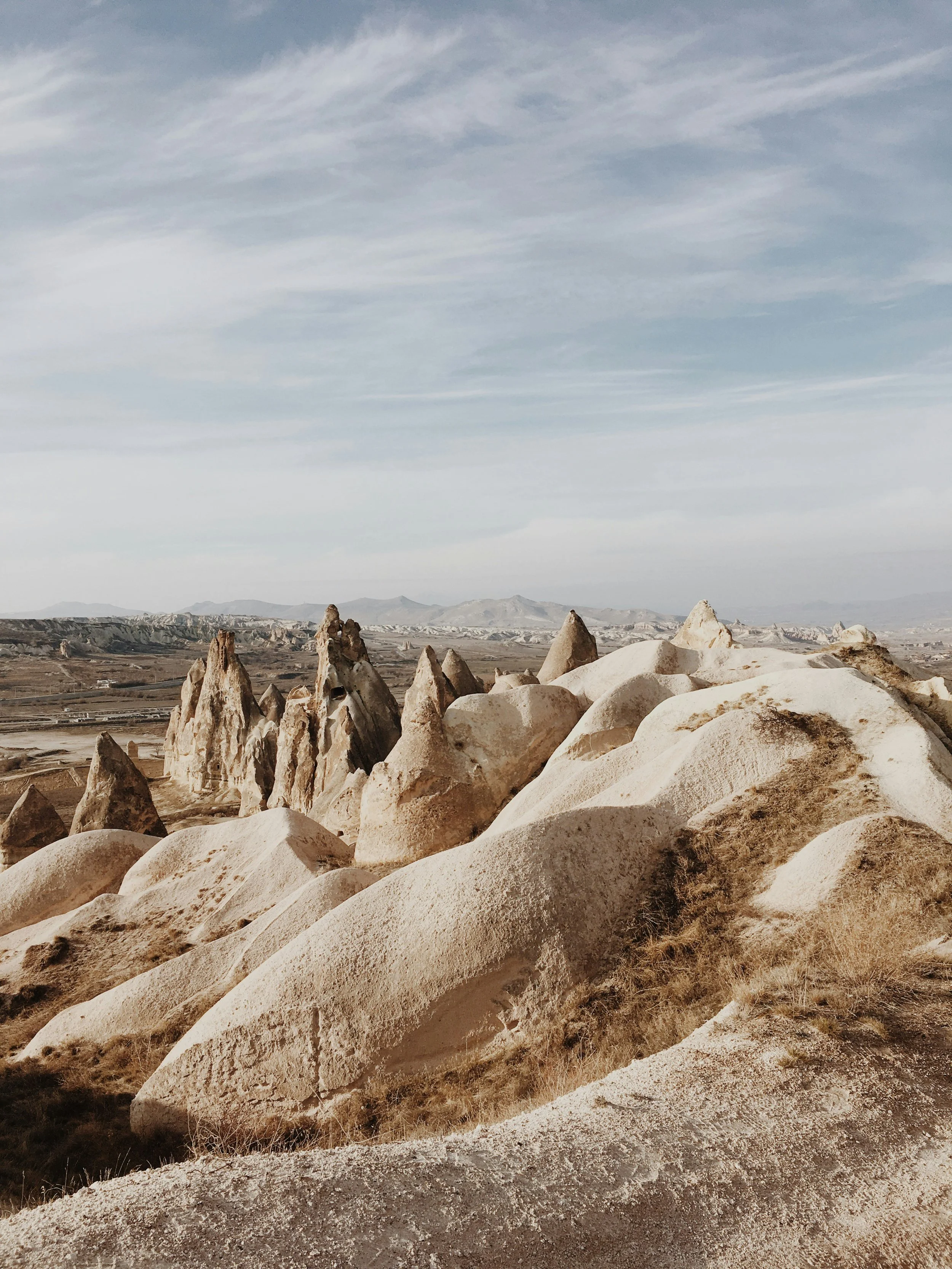
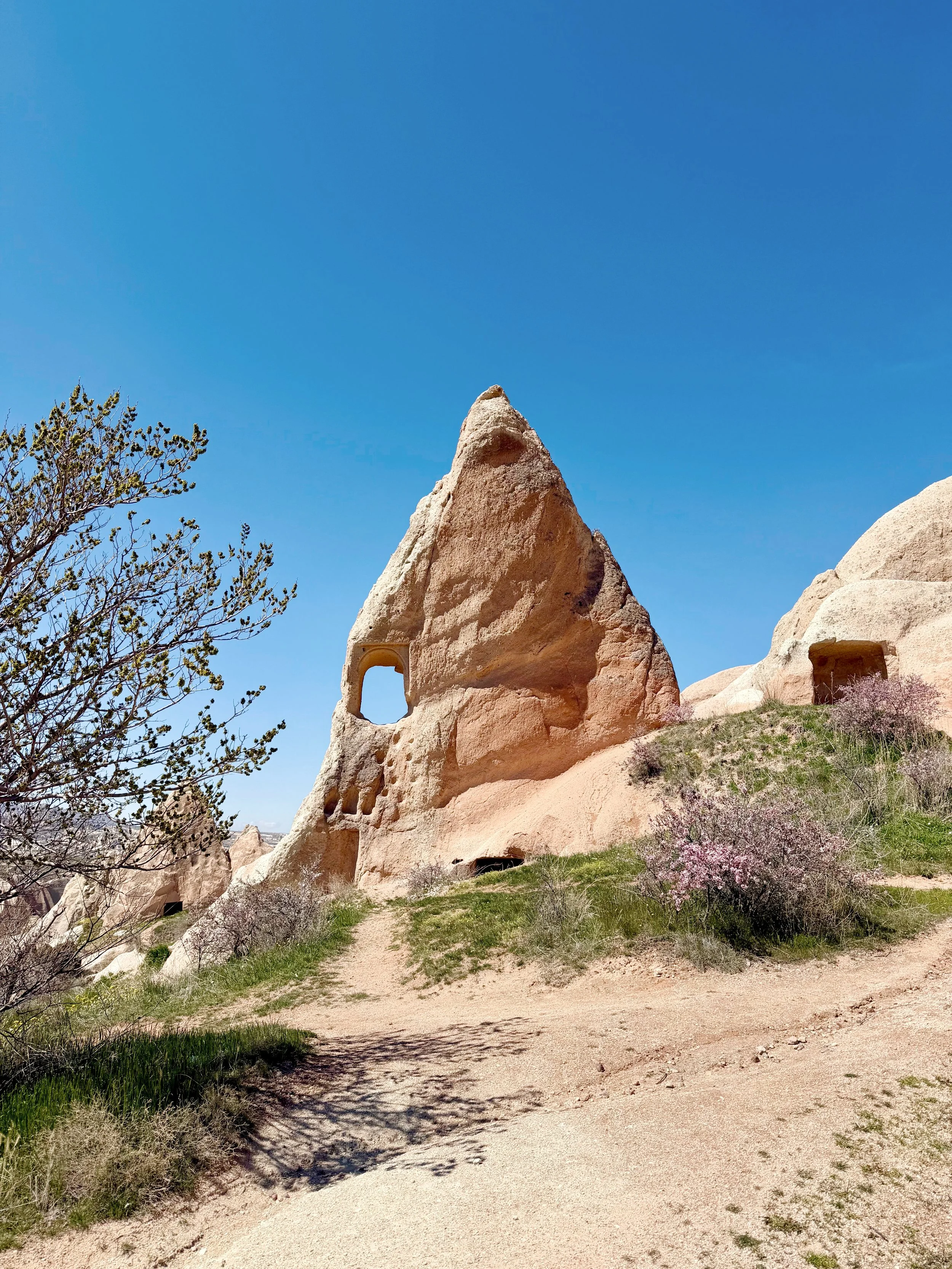
That landscape is the result of ancient volcanic eruptions that left behind soft rock formations, the ones you’ve probably seen in photos. Over centuries, people carved into that rock, creating homes, churches, and entire underground cities. Early Christians used these spaces to hide and survive during times of invasion. When you’re there, it doesn’t feel like distant history. It feels close, almost tangible.
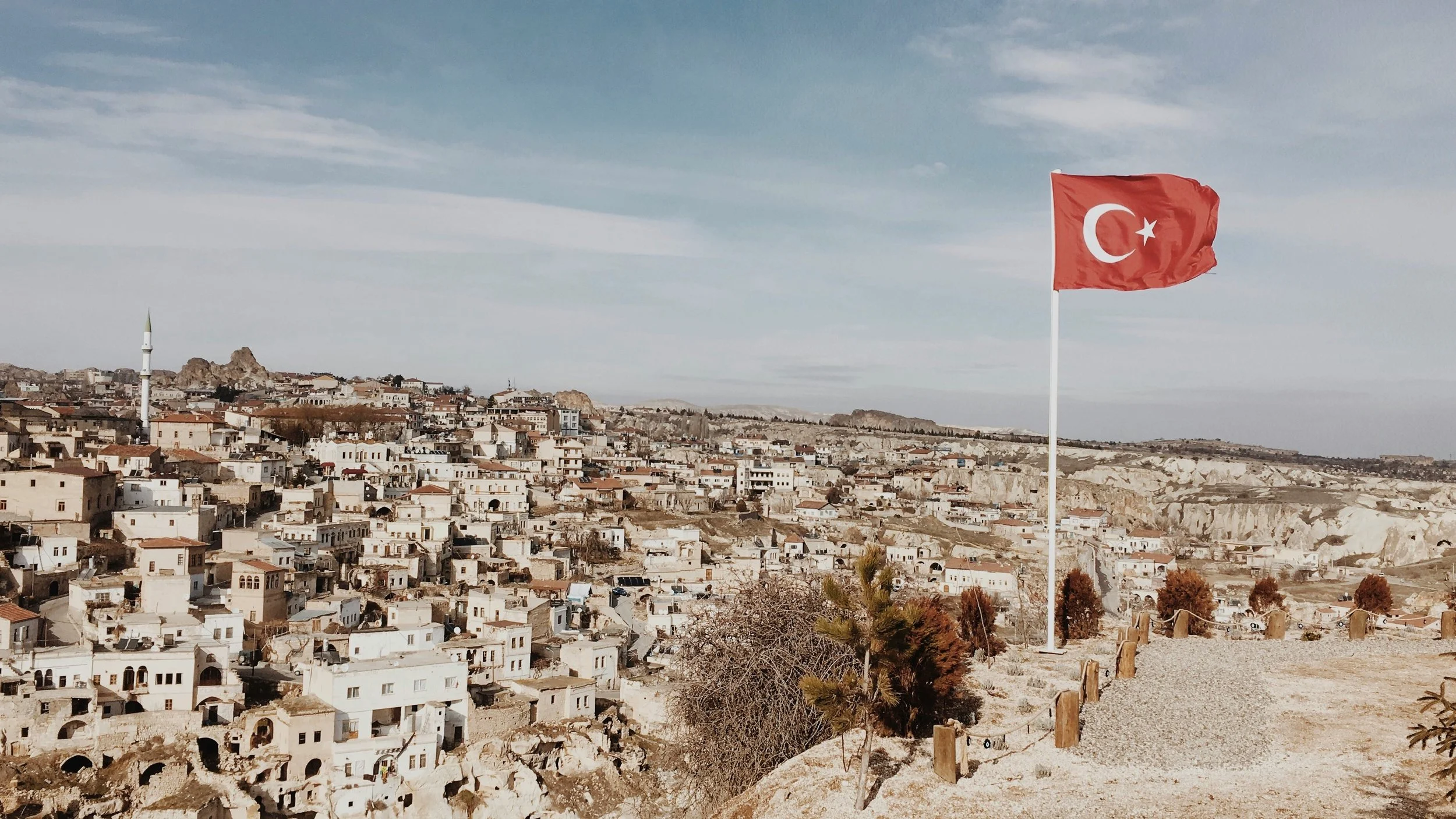
There are a handful of towns that make up the region. Göreme, Ürgüp, Uçhisar, Avanos, and Ortahisar all have their own rhythm. Göreme is where most people base themselves, and for good reason. It’s central, easy, and close to just about everything. Uçhisar feels a bit quieter, with wide open views. Avanos sits along the river and is known for pottery. Ürgüp and Ortahisar feel a little more local, a little less touched by the constant flow of visitors. For us, Göreme made the most sense. It gave us access to everything while still feeling like a place we could settle into.
Where you stay here really matters. We’d strongly recommend skipping chain hotels and choosing a cave hotel instead. It’s part of what makes Cappadocia feel like Cappadocia. We stayed at Sultan Cave Suites, part of the Kelebek Group, and it ended up being one of those places that becomes part of the memory, not just where you sleep.
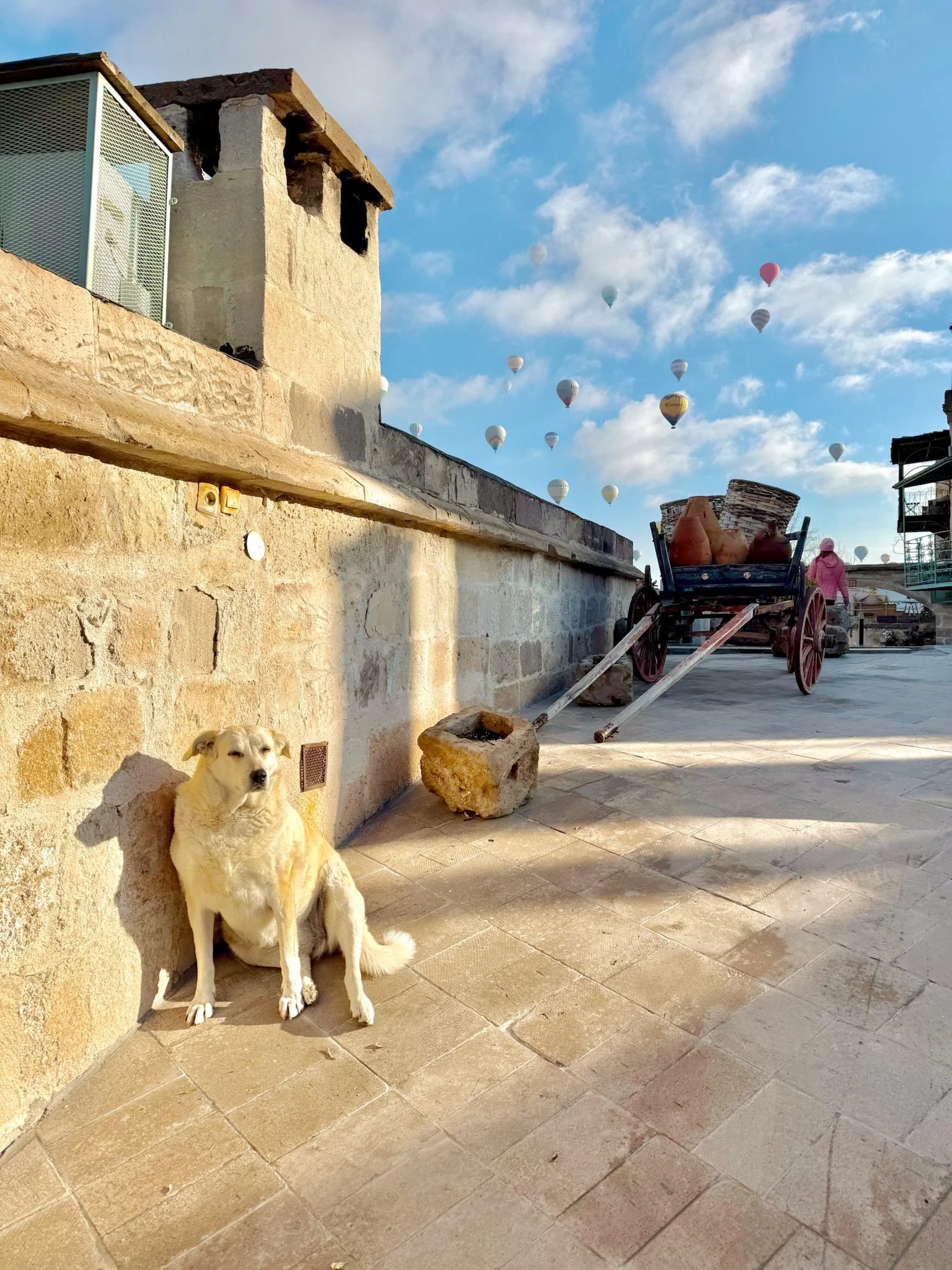
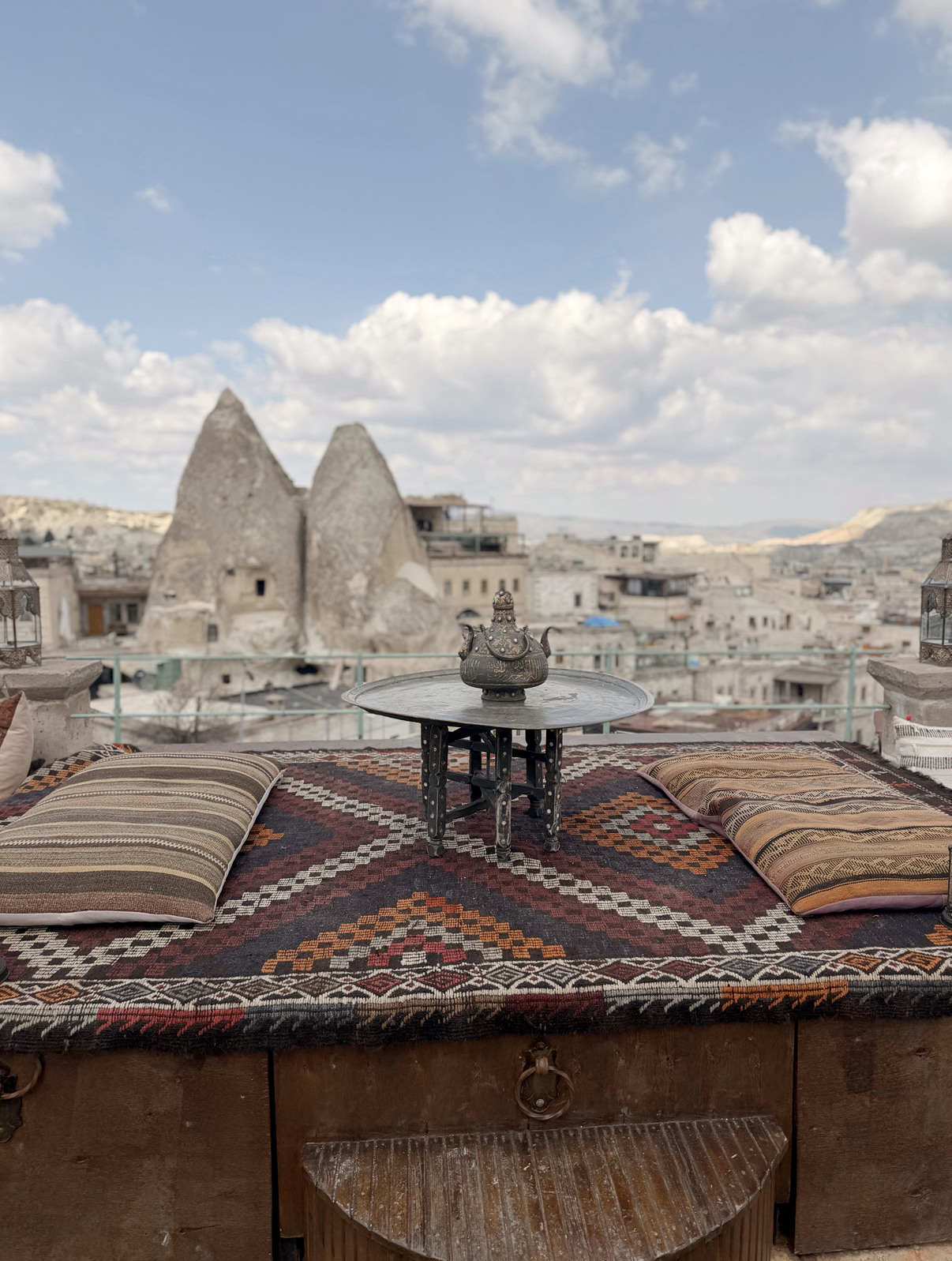
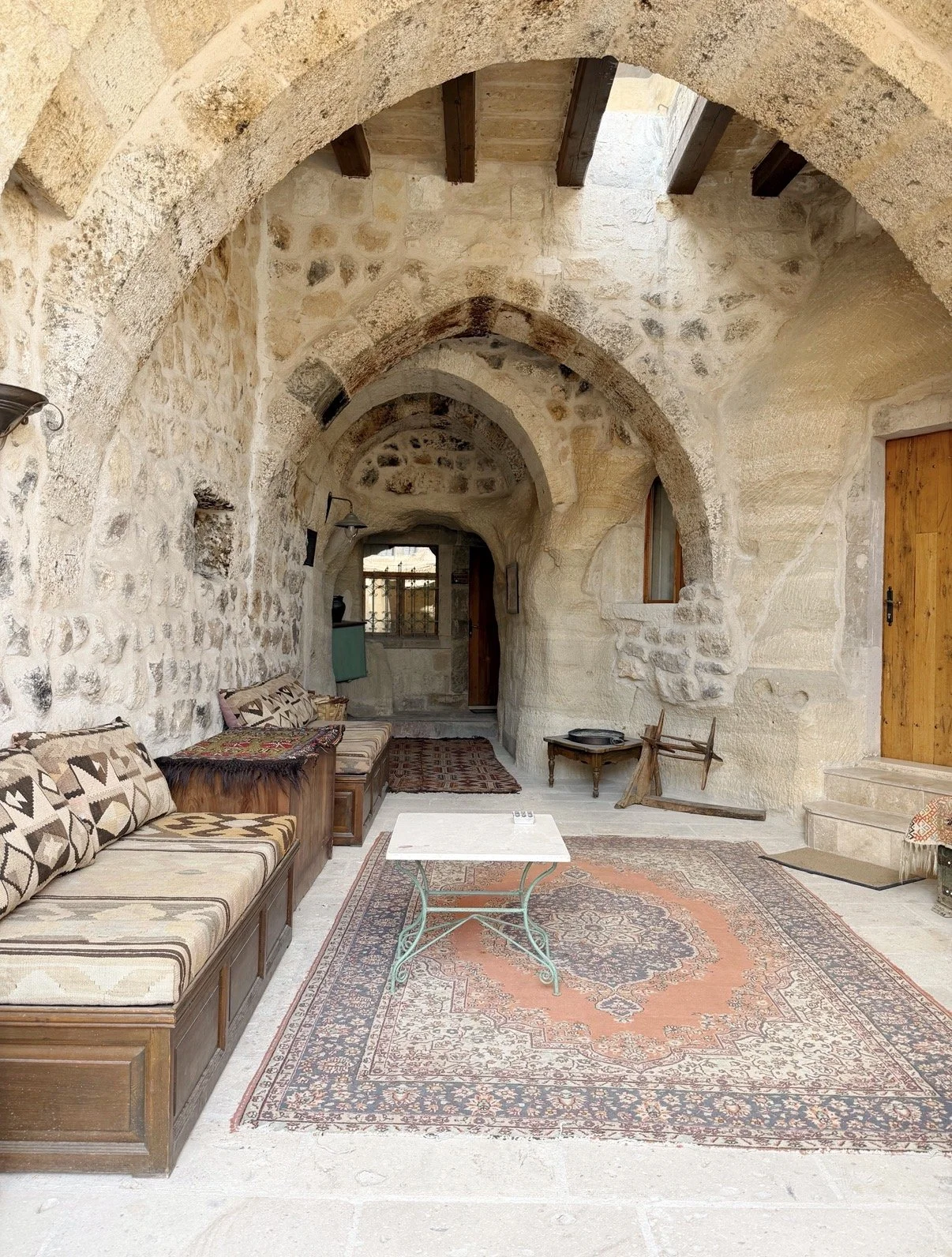
The terrace is the one you’ve probably seen before, the one overlooking the valley as hot air balloons rise in the early morning light. It’s as beautiful as it looks, maybe more when you’re standing there with a cup of coffee and the air still feels cool from the night. But what made it special for us was everything else. The building itself was once the owner’s grandparents’ home, now expanded into a series of cave rooms carved into the rock.
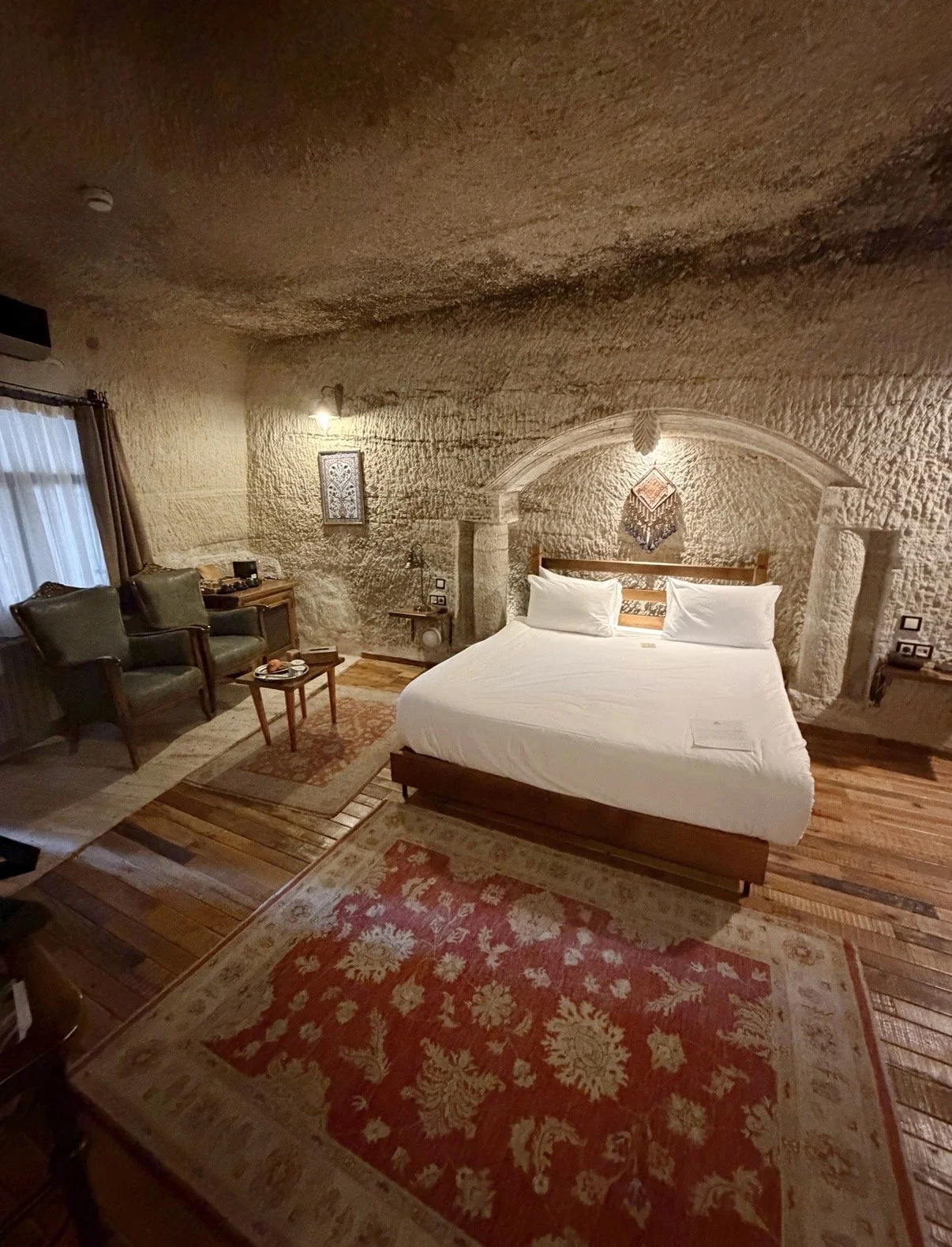
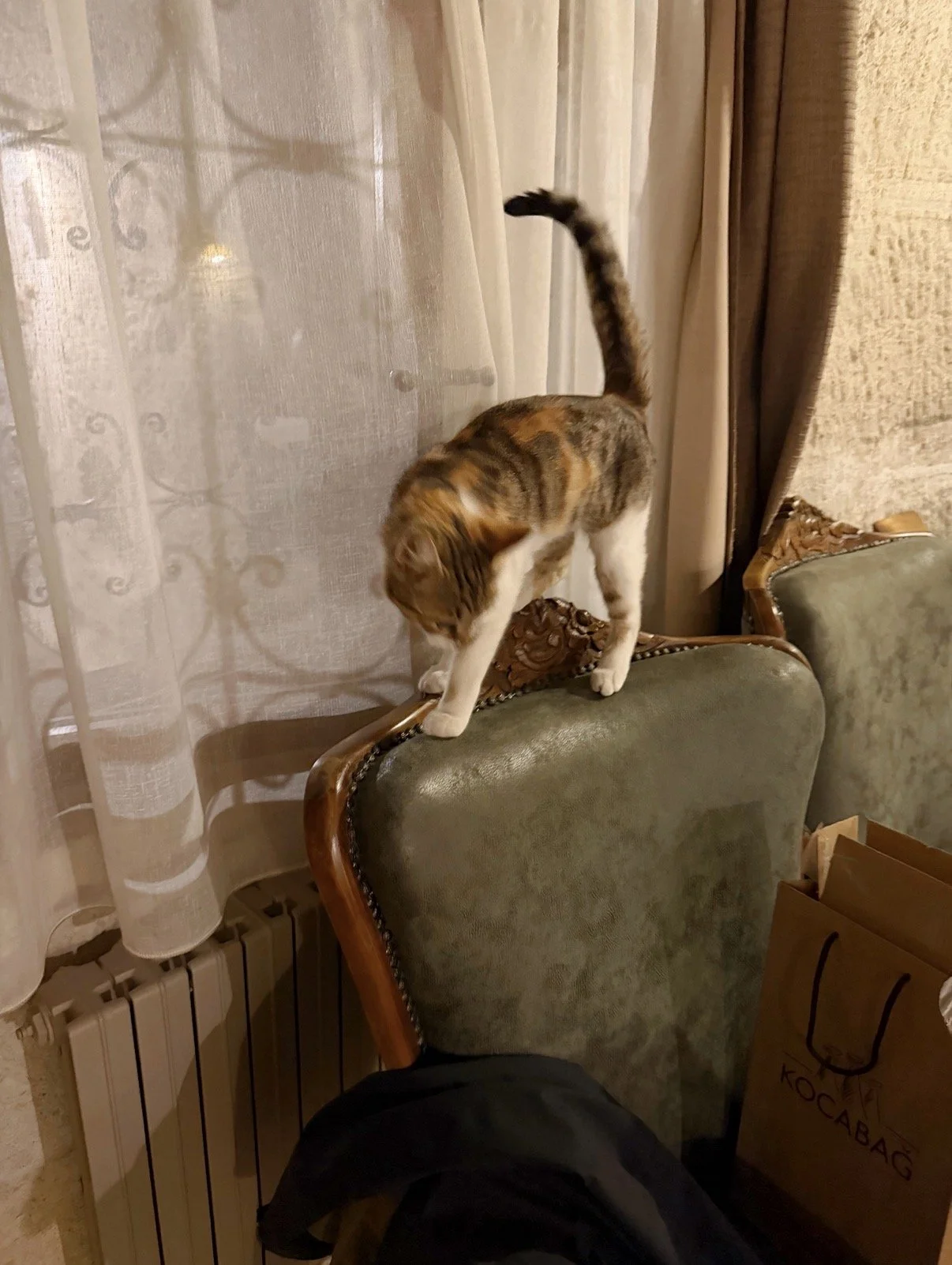
The rooms feel warm and personal, filled with textures and pieces that reflect the region. Woven textiles, small details from local artisans, bowls of dried fruit and nuts waiting for you when you arrive. The floors in the bathroom are heated, which you don’t think about until you need it and then suddenly it’s everything. And then there are the cats. They wander in and out like they own the place, and more than once we came back from dinner to find one curled up on a chair in our room, completely at home.
Cappadocia is one of those places where what you do shapes how you remember it. The landscape is stunning, but it’s the experiences that bring it to life.
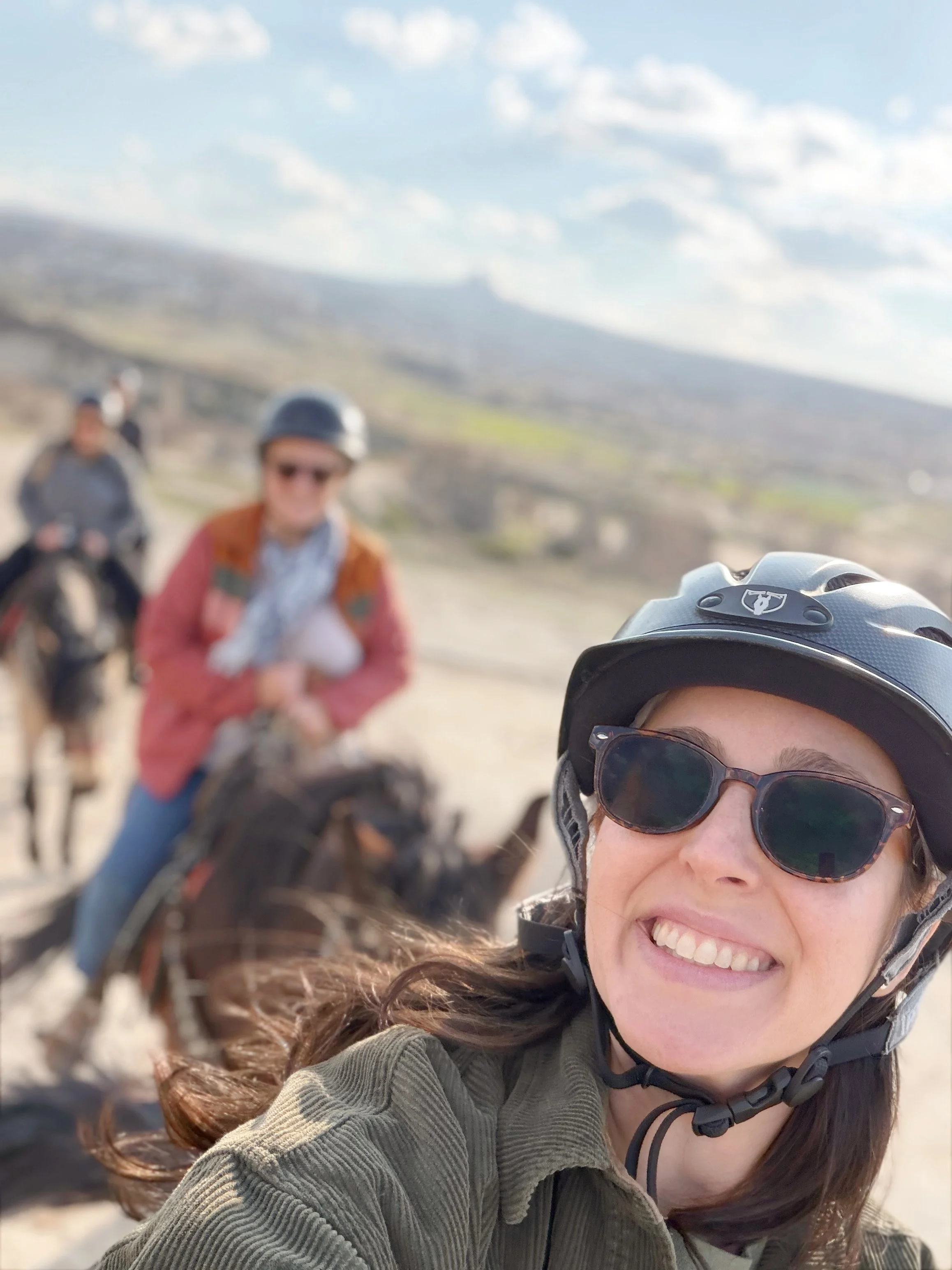
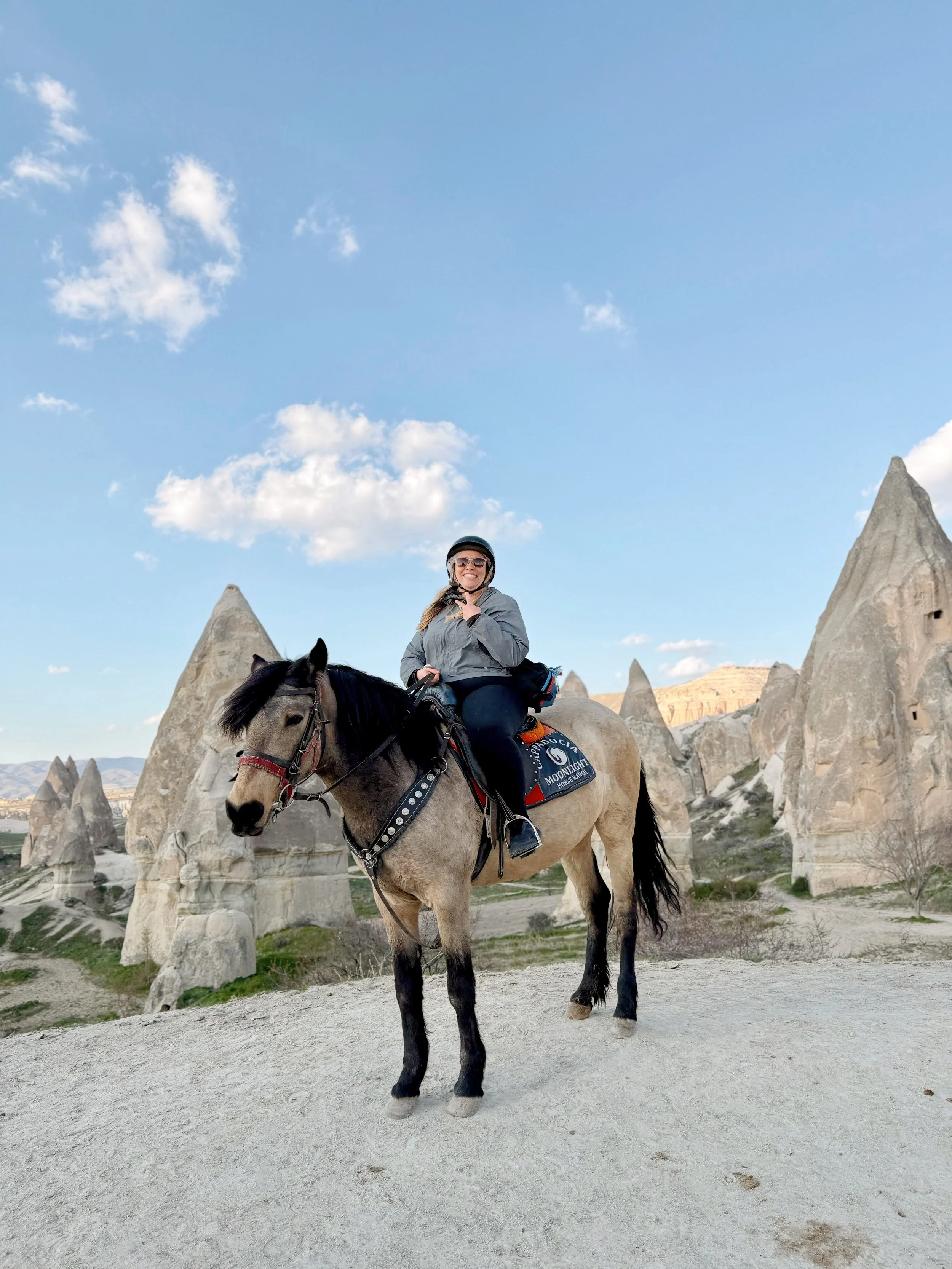
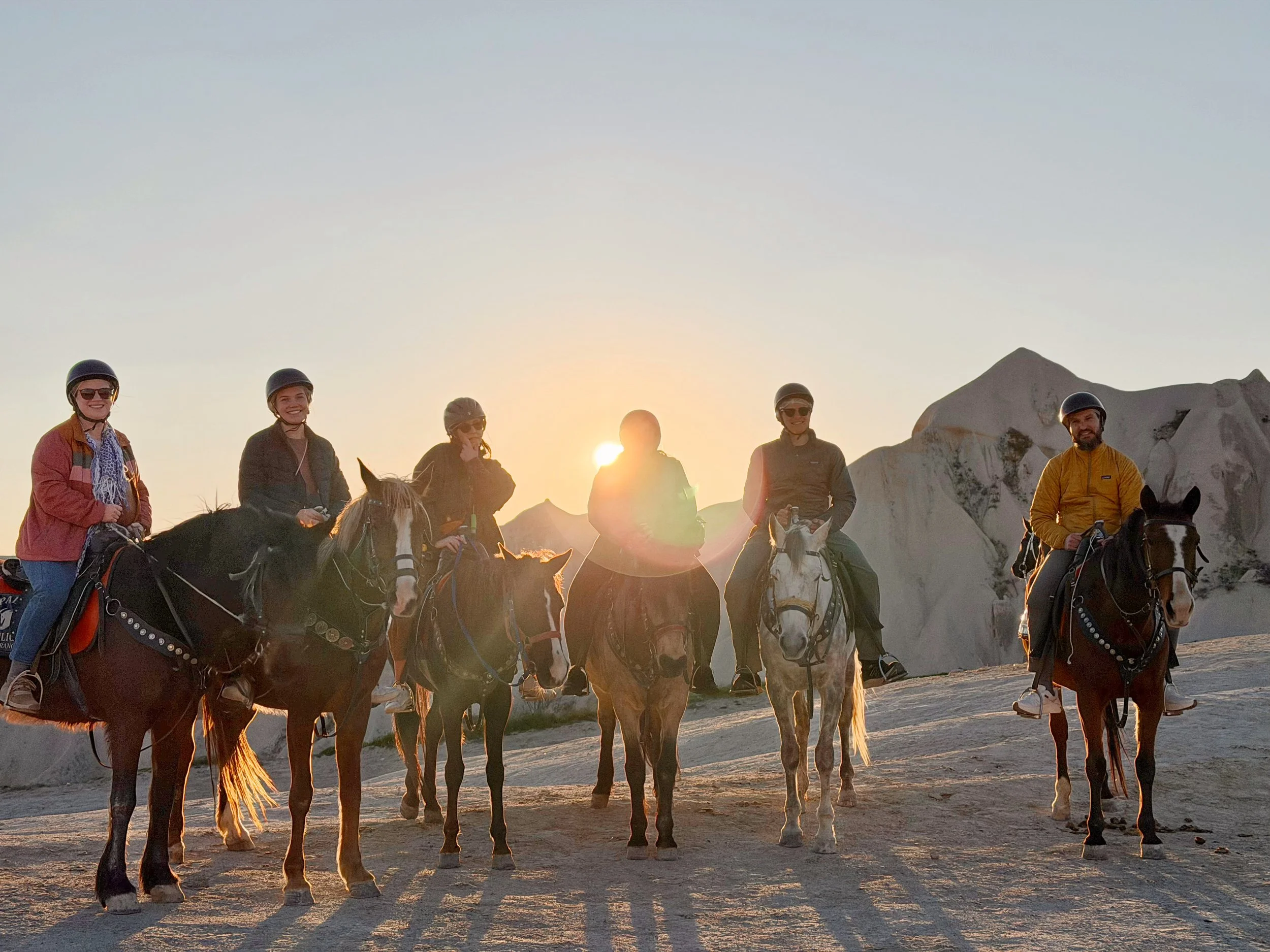
One of our favorite moments was horseback riding through the Red and Rose Valleys. There’s something about moving through that terrain slowly, hearing the quiet, feeling the dust underfoot, that makes everything feel closer. We signed up for a group ride and ended up just being us, which made it feel even more personal. Our guides didn’t say much, but they didn’t need to. They led us through Sword Valley, up to a plateau overlooking Göreme, past cave homes carved into the rock. At different points they stopped to take photos and videos, capturing moments we didn’t even realize were happening. It felt effortless and a little surreal.
The King’s Valley breakfast is harder to put into words. It’s one of those experiences that feels deeply human, not curated or performative. Ali, the owner, walks you down a series of narrow, hand-carved steps into the valley. Steps he helped carve when he was a child. At the bottom, there’s a table set with fresh food, local cheeses, fruits, spreads, and warm flatbread being made right there.
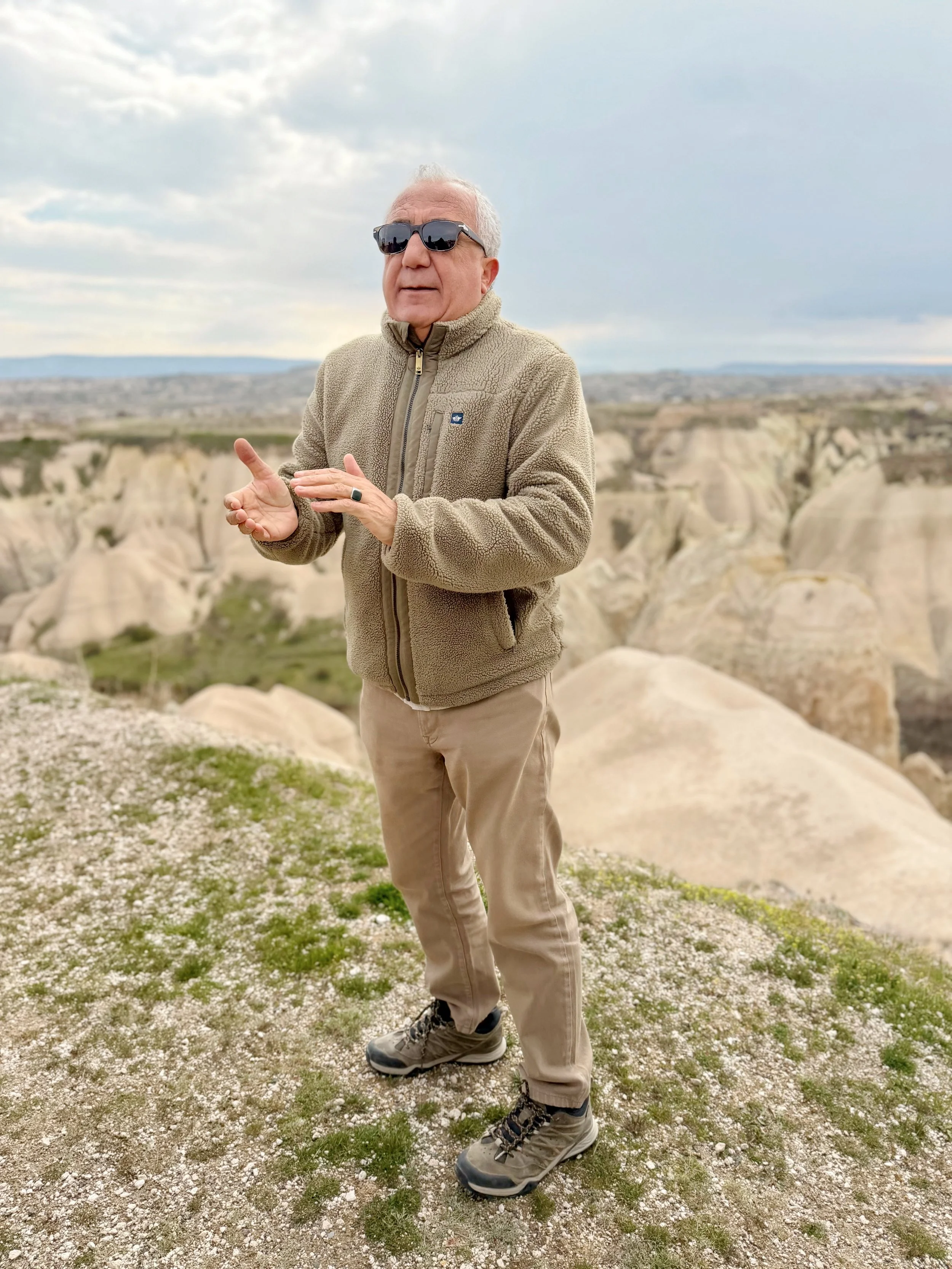
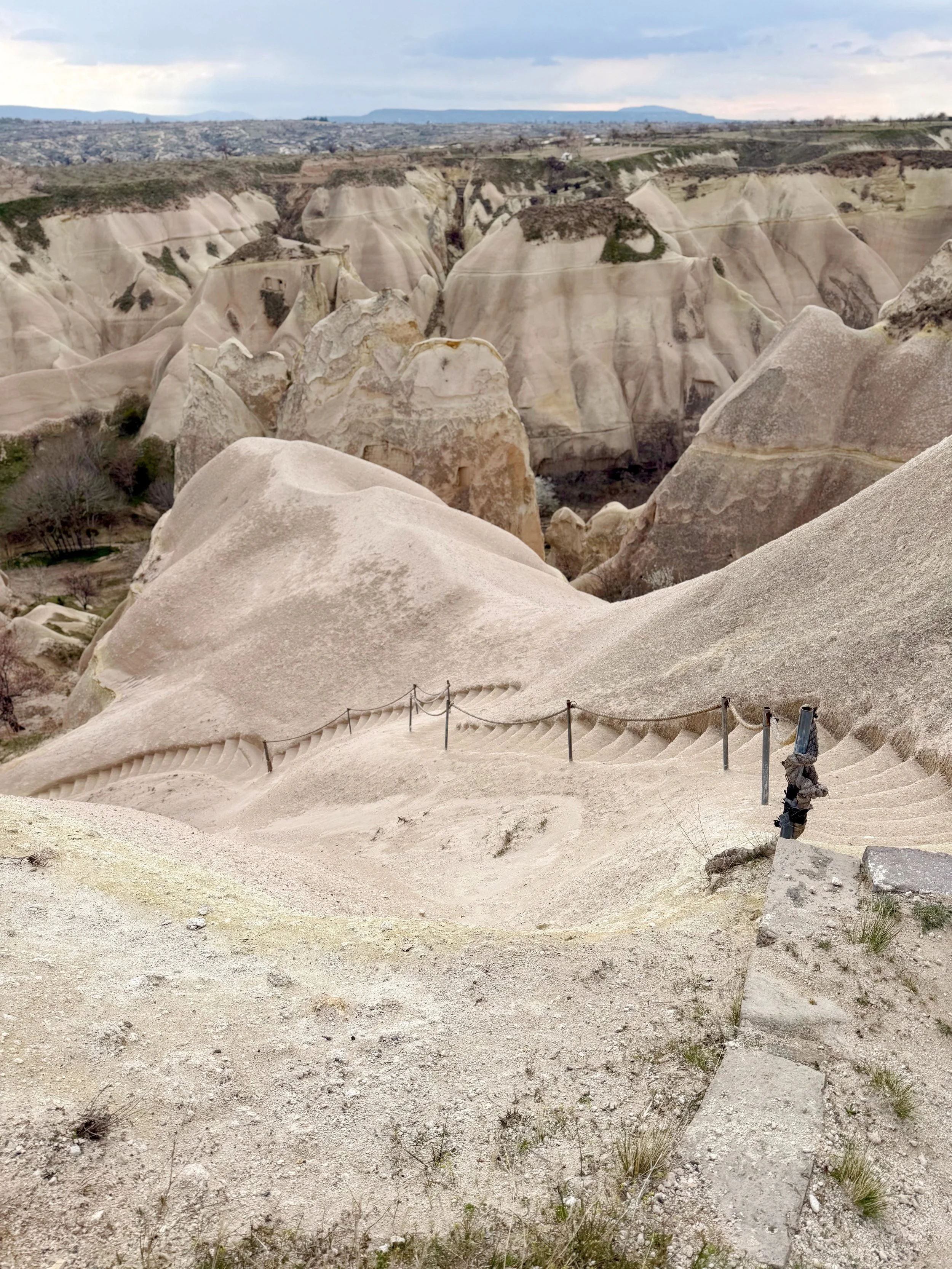
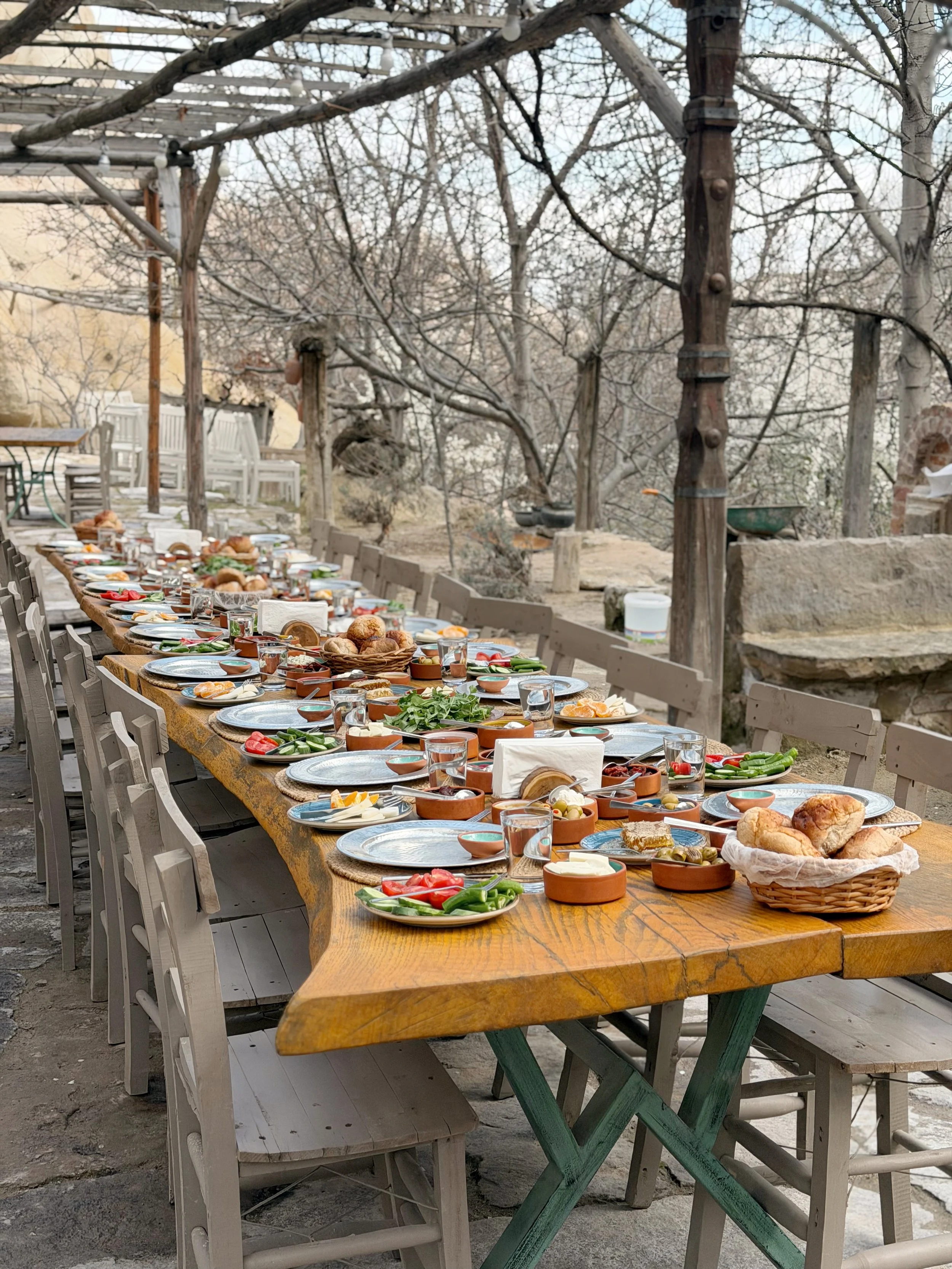
You sit under open sky, often with blossoms overhead, and he starts telling stories. About growing up in a different time, when everything moved slower, when donkeys were the main form of transport, before tourism reshaped the region. There’s a softness to the way he speaks about it, but also pride. After breakfast, he takes you through his family’s farm, into a small living space where homemade wine is poured, past pigeon houses that once played an essential role in daily life, and through fields where animals roam freely. It doesn’t feel like a tour. It feels like being invited into someone’s story.
The underground cities are something else entirely. Places like Derinkuyu and Kaymaklı stretch deep beneath the surface, carved layer by layer over generations. Entire communities lived down there, with ventilation systems, storage rooms, chapels, and space for animals. They were built for protection, and you feel that immediately when you enter.
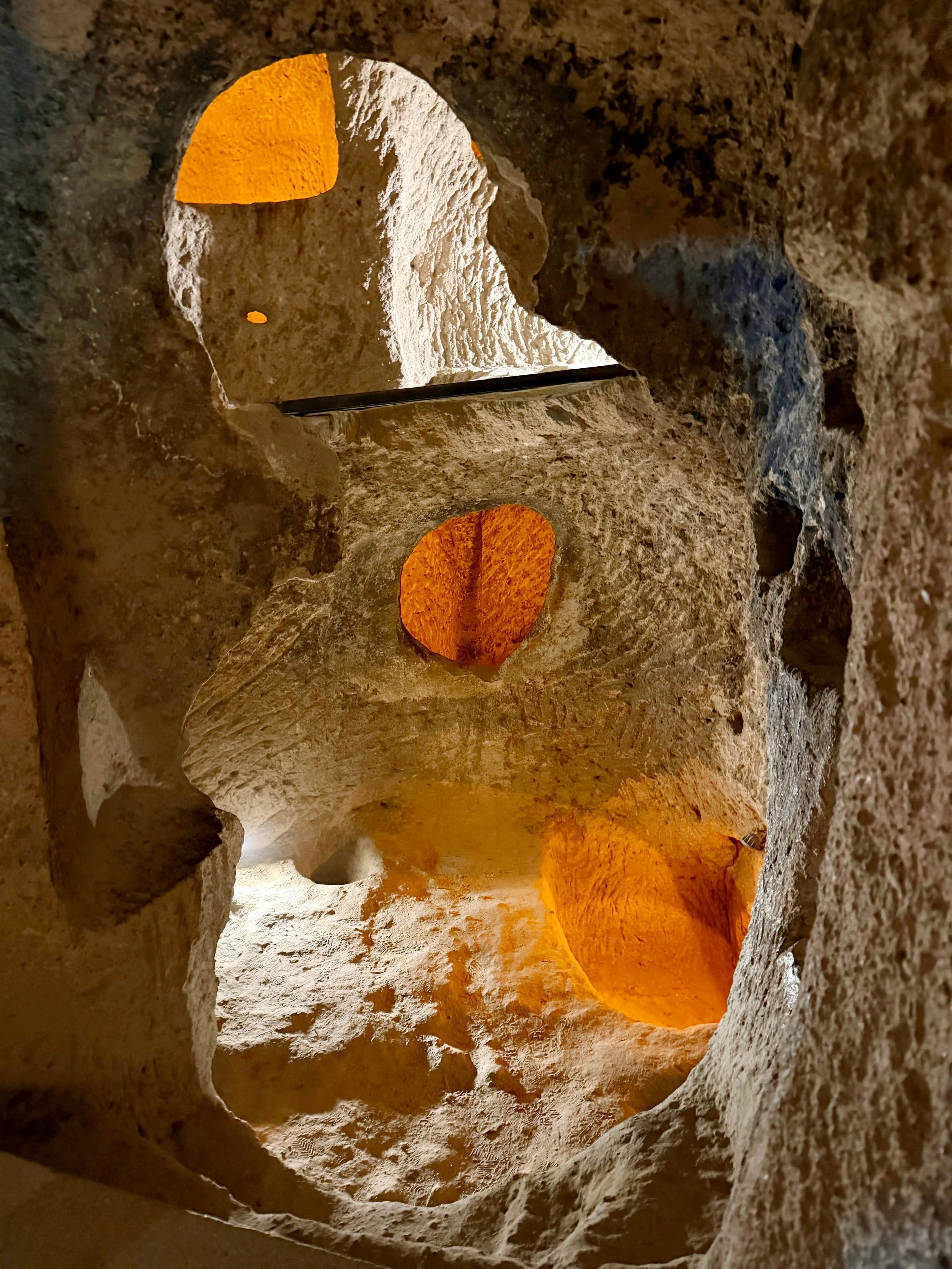
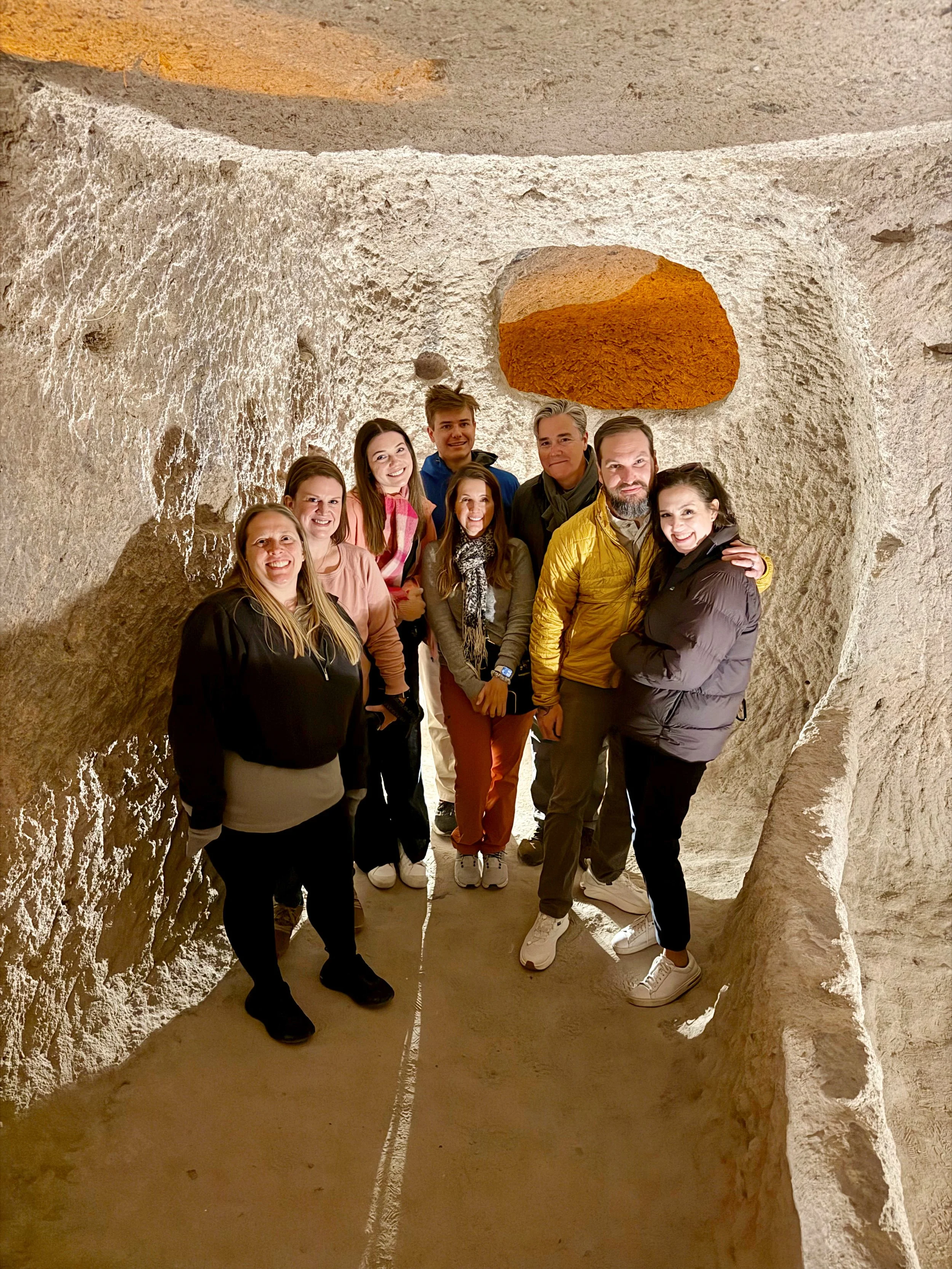
The passageways are narrow and low. You find yourself ducking, turning sideways, moving through spaces that feel intentionally disorienting. It’s not for everyone, especially if you’re claustrophobic. But that discomfort is part of understanding what they were designed for. It gives you a real sense of the resilience and ingenuity of the people who built them.
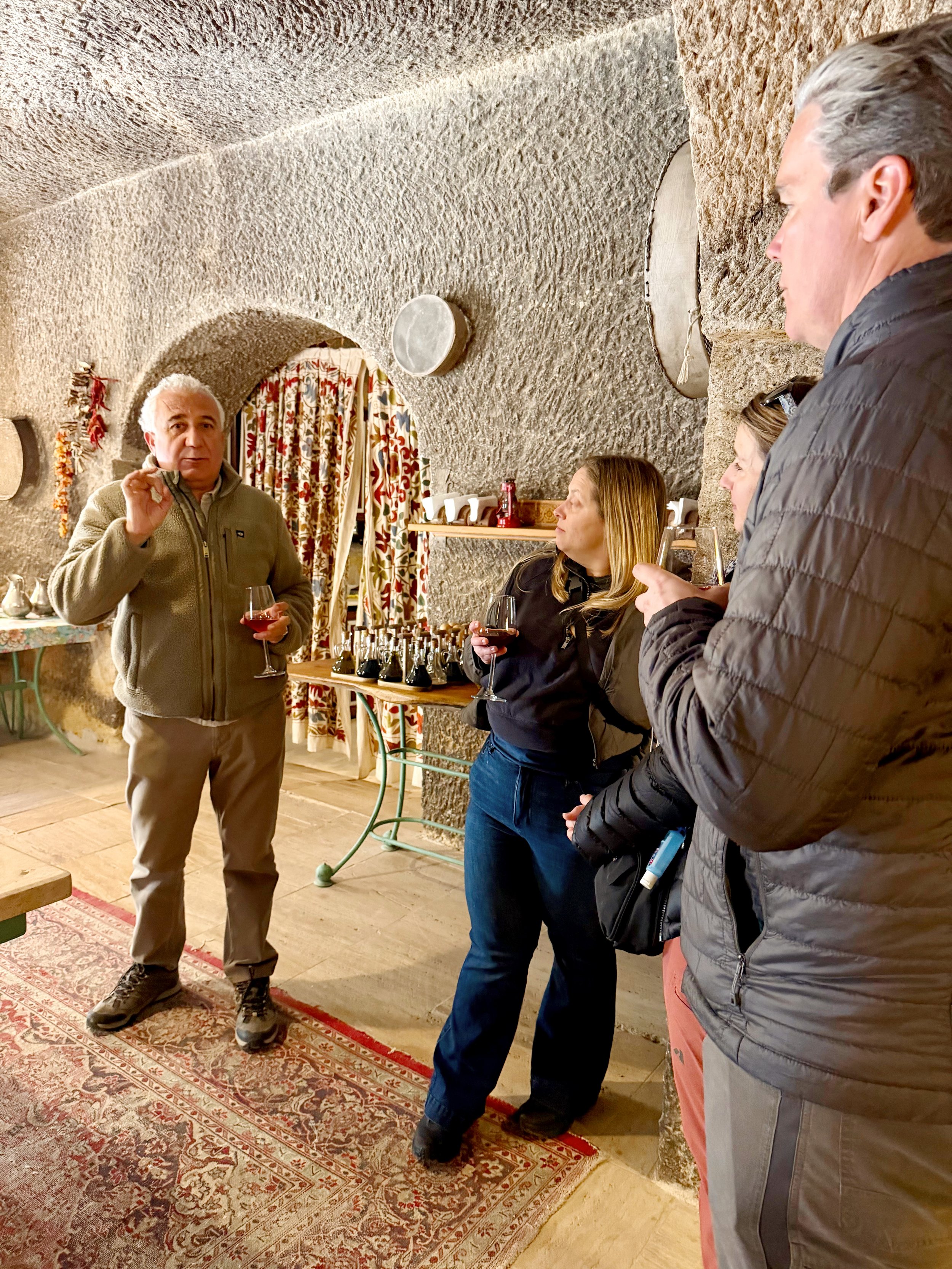
We also spent an afternoon at Kocabag Winery, which ended up being one of the more unexpected highlights. Cappadocia doesn’t always come to mind when you think of wine, but it should. The winery has deep roots in the region, working with local grape varieties and combining traditional methods with more modern techniques. Their wines have won international recognition, but they still feel very much tied to place.
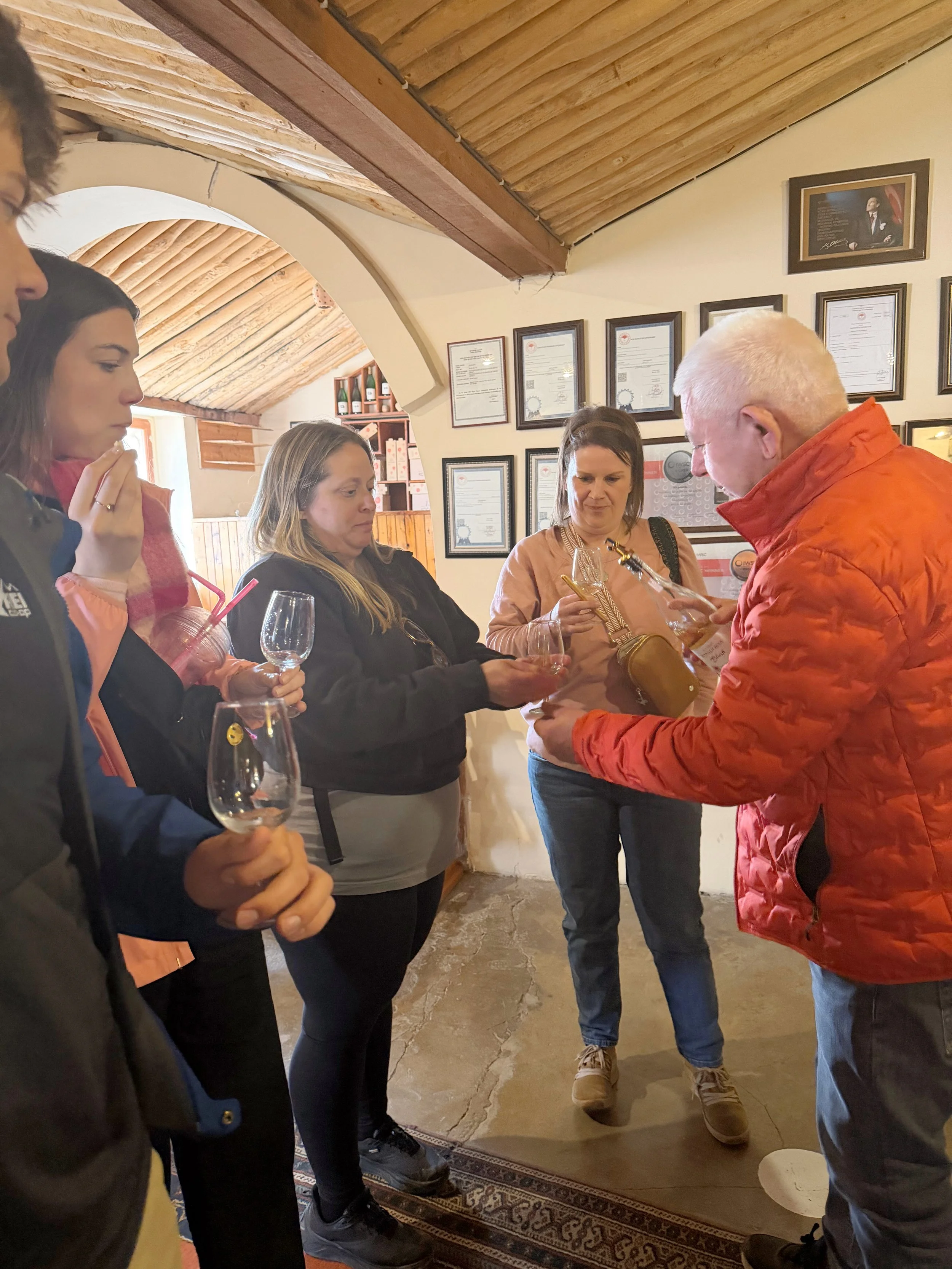
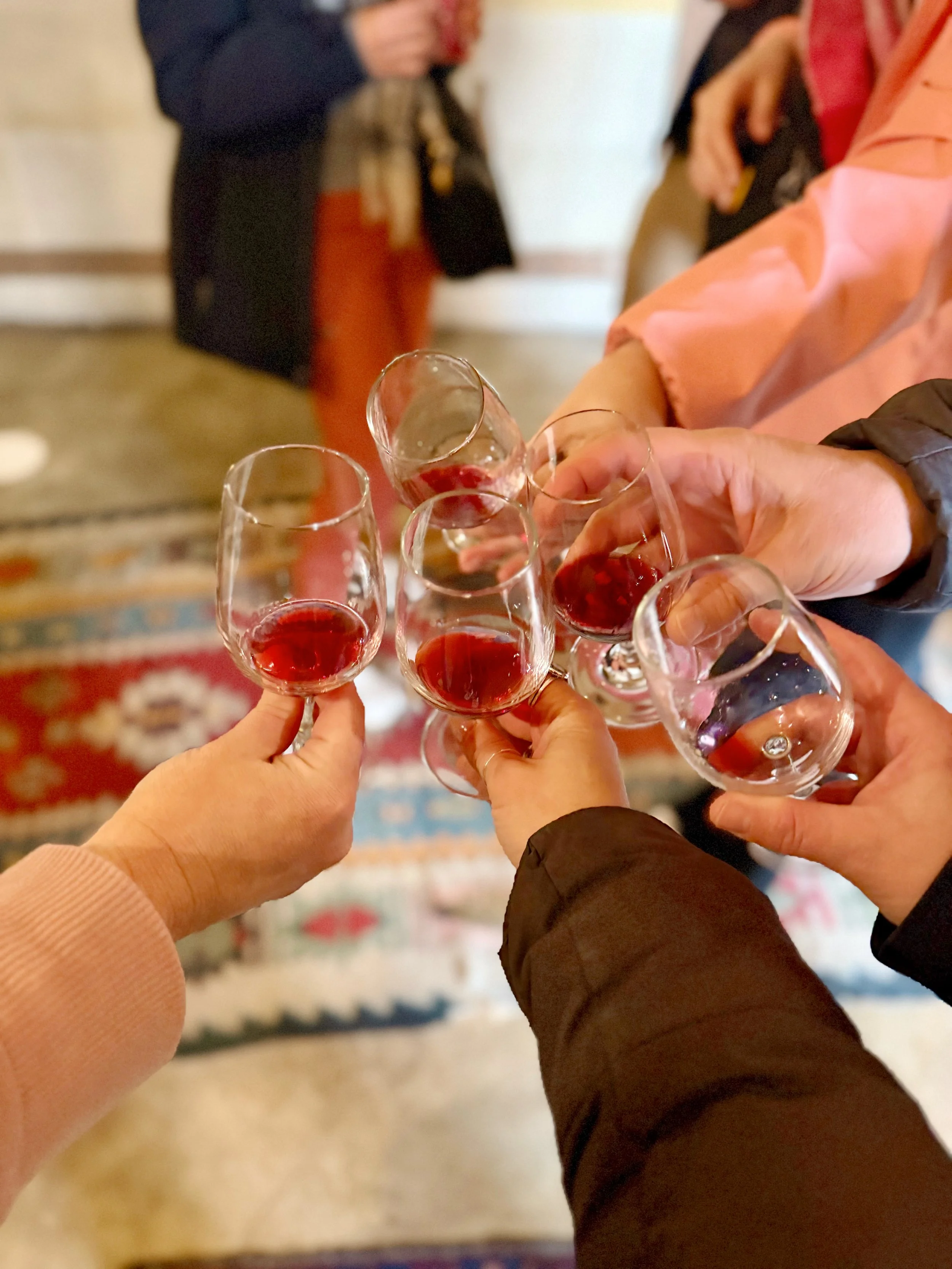
Winemaking in Türkiye isn’t easy. High taxes and strict regulations make it a challenging industry to sustain, which makes places like this even more meaningful. Their bottles aren’t widely exported. You can find them locally and in limited quantities in Canada, but that’s about it. Sitting there, tasting through their wines, hearing about the process, you realize this is something you can’t really recreate once you leave. We made sure to bring a couple bottles home, knowing they’d carry us back in a small way.
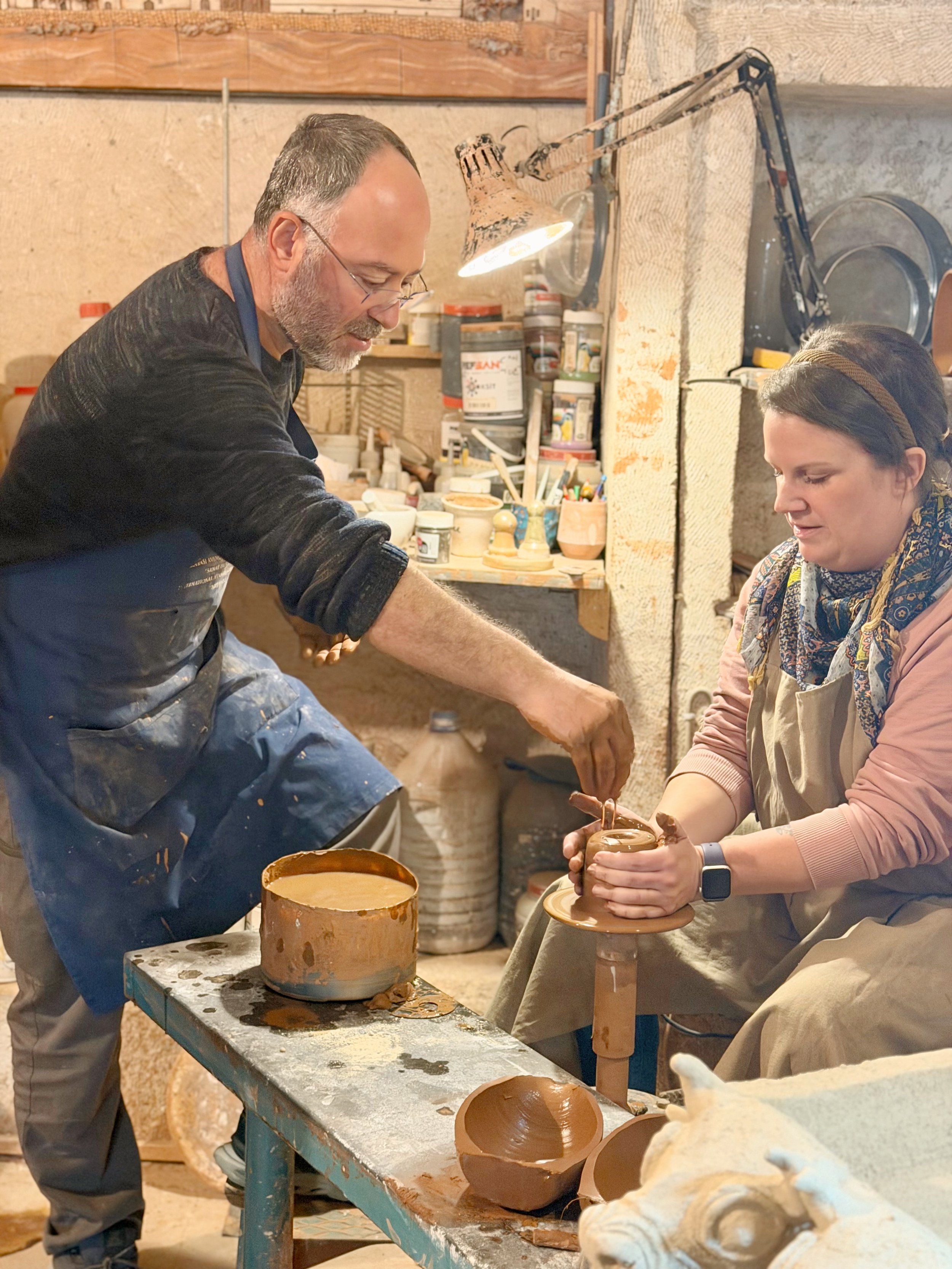
In Avanos, we visited a small pottery studio run by twin brothers, Mehmet and Levent. It’s easy to get pulled into the more commercial shops, but this felt entirely different. They collect their own clay from the surrounding hills, shape it by hand, and fire each piece in a kiln that reaches incredibly high temperatures. Every piece is slightly different, marked by the process itself.
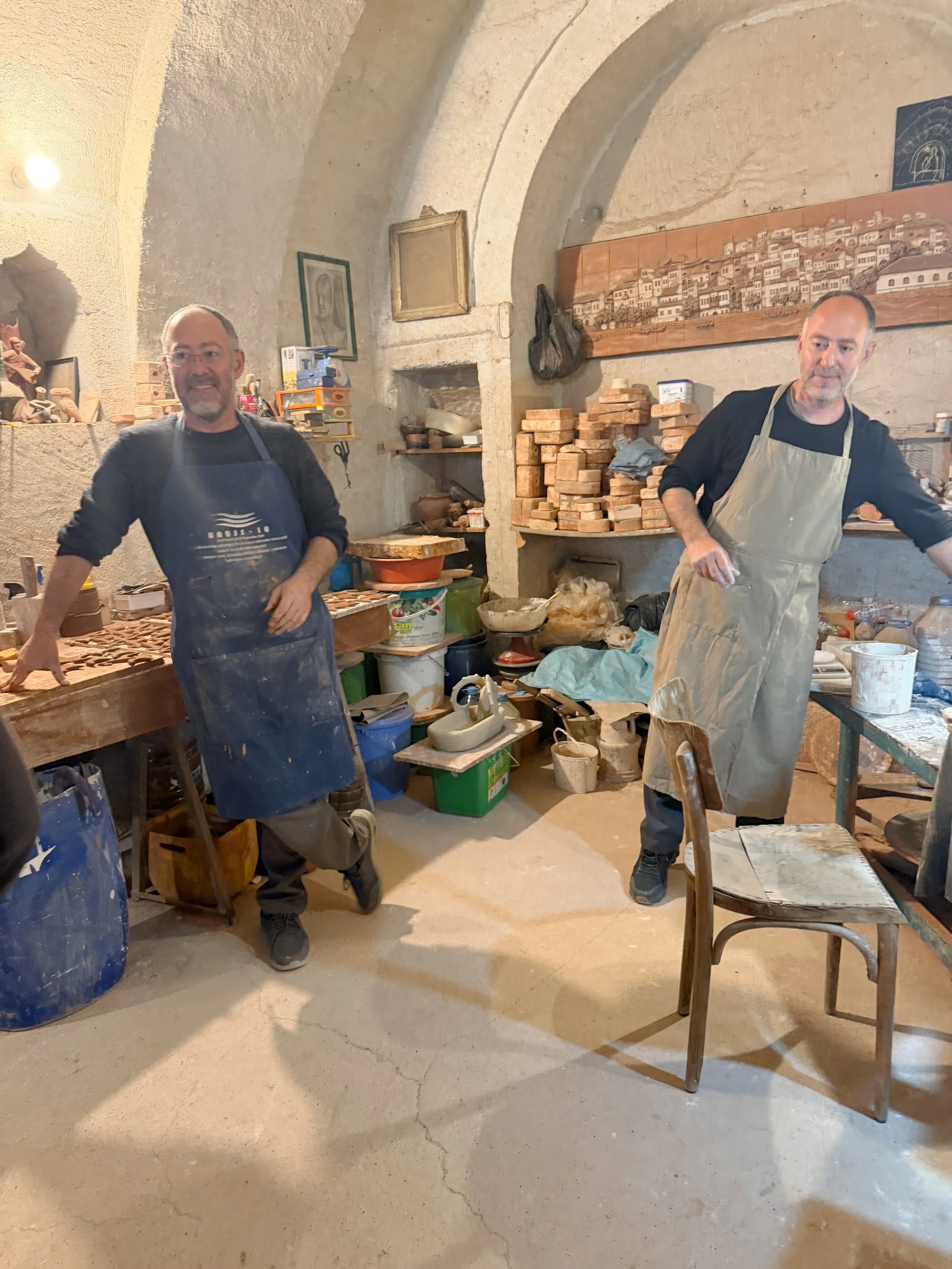
They walked us through how they work and then handed the wheel over. It’s harder than it looks, but also grounding in a way that’s hard to explain. You leave not just with something physical, but with a connection to how it was made.
And then there’s the hot air balloon ride. It’s the thing everyone talks about, and it lives up to it. The early wake-up is worth it. You start in the dark, with coffee in hand, watching the balloons slowly inflate around you. Then suddenly you’re rising, quietly, over the valleys as the light shifts from blue to gold.
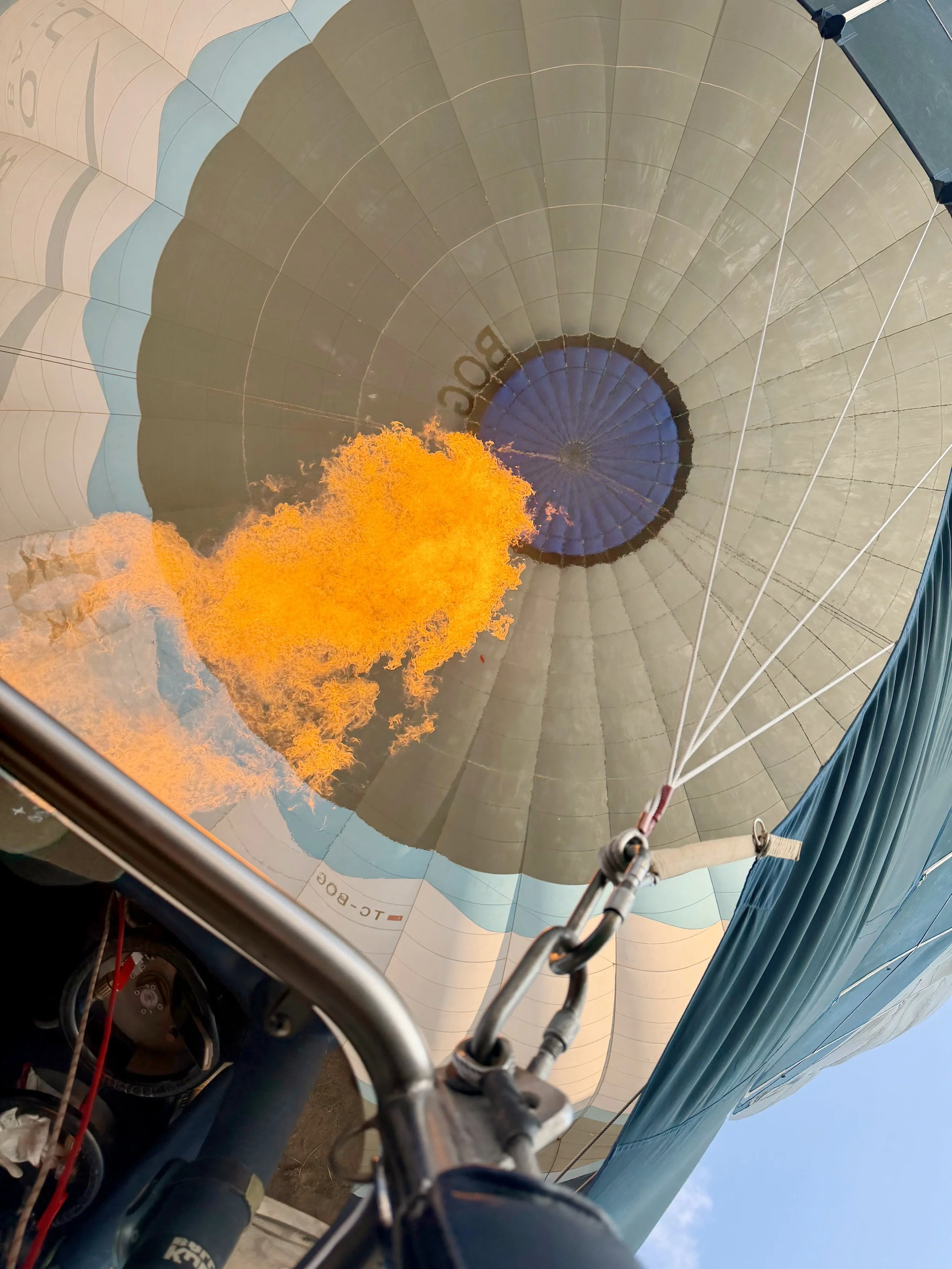
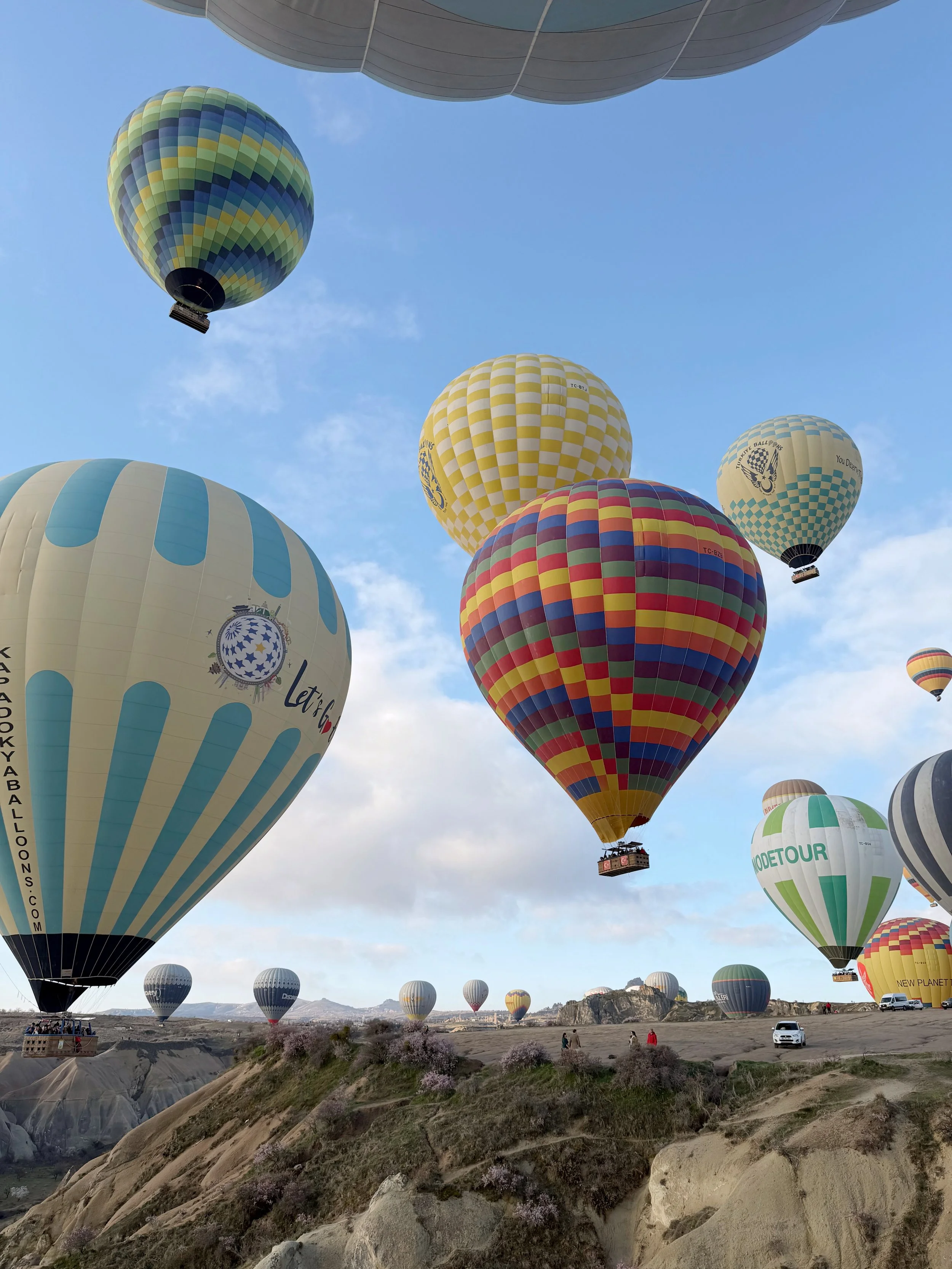
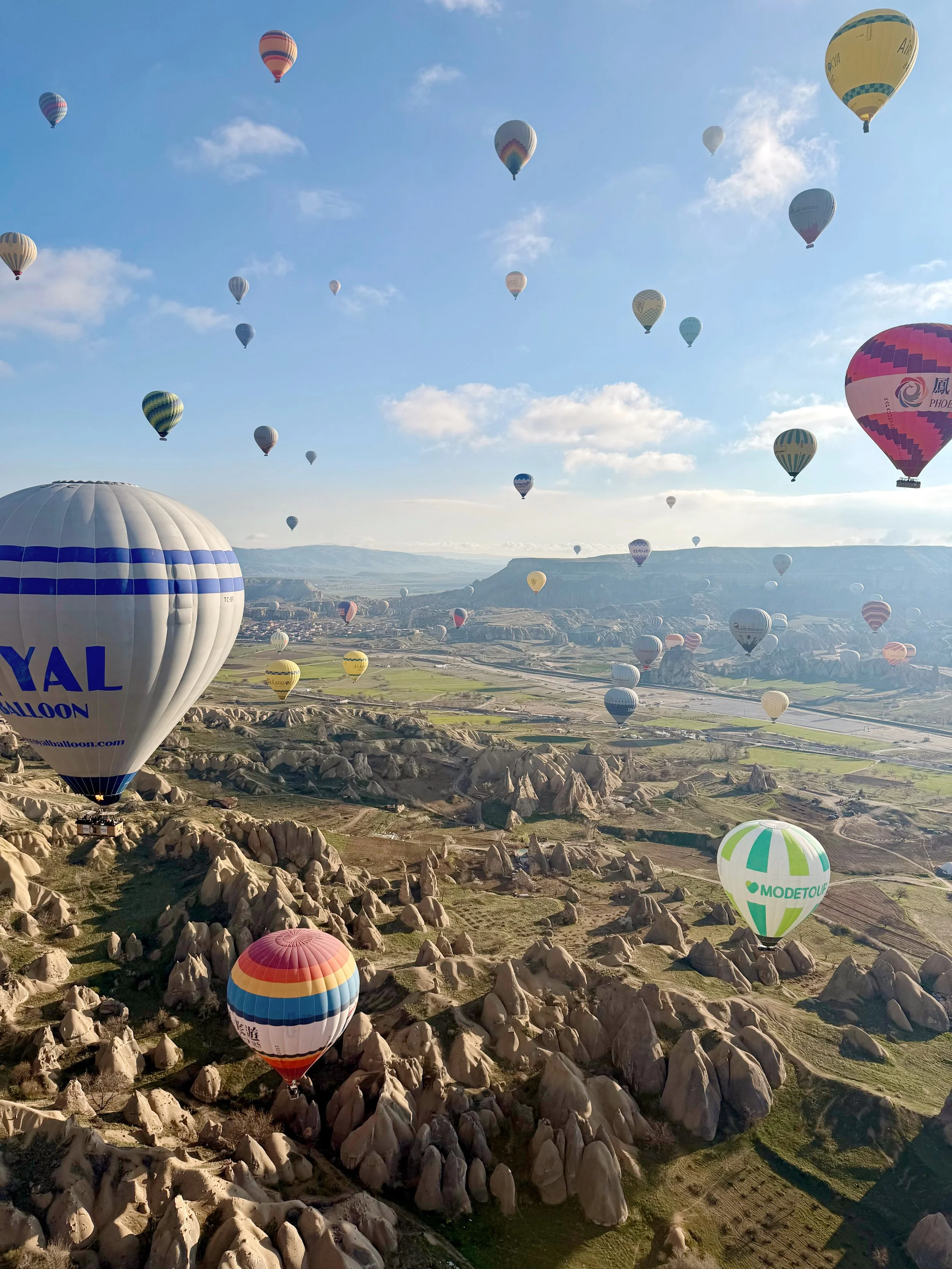
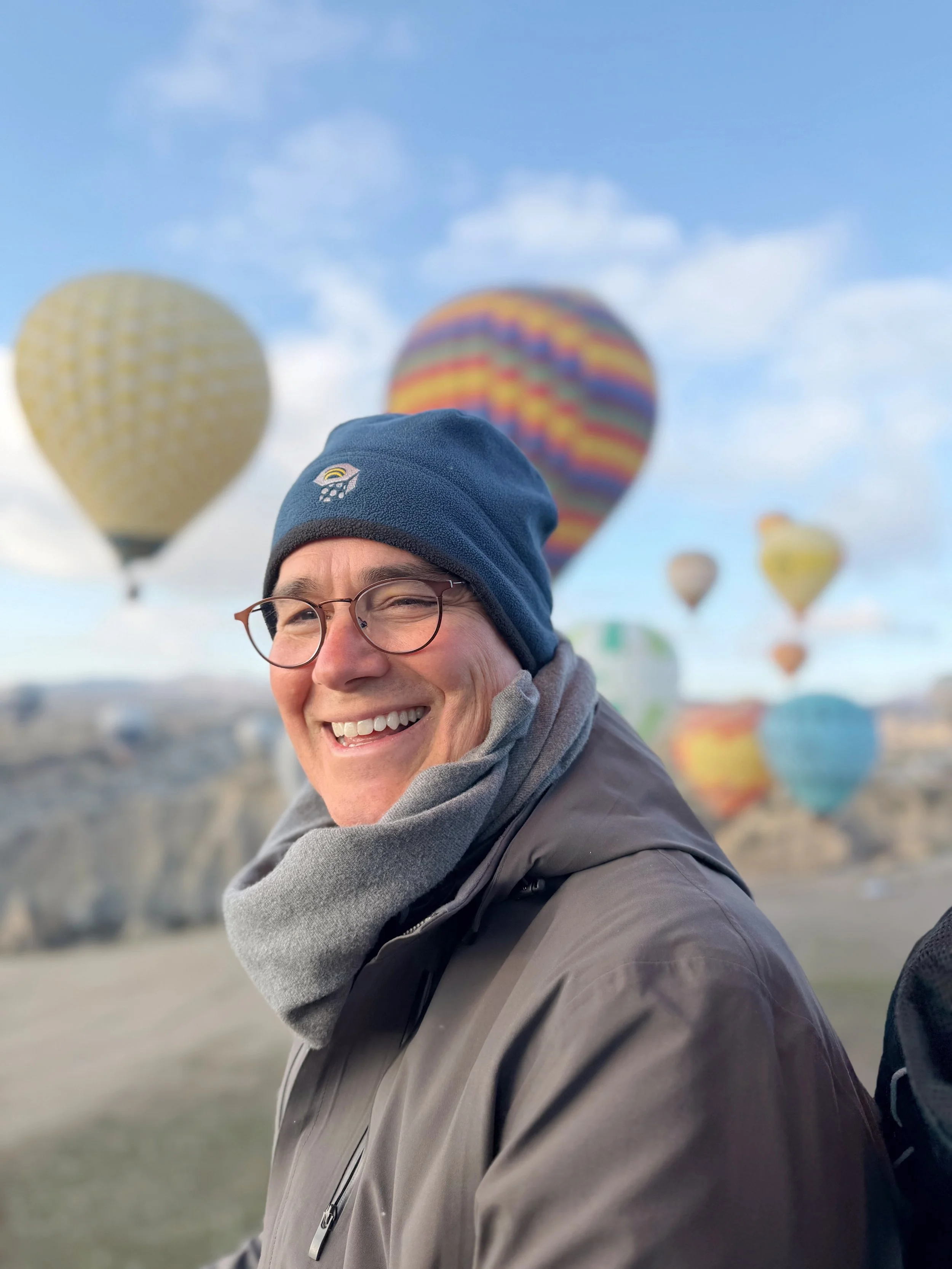
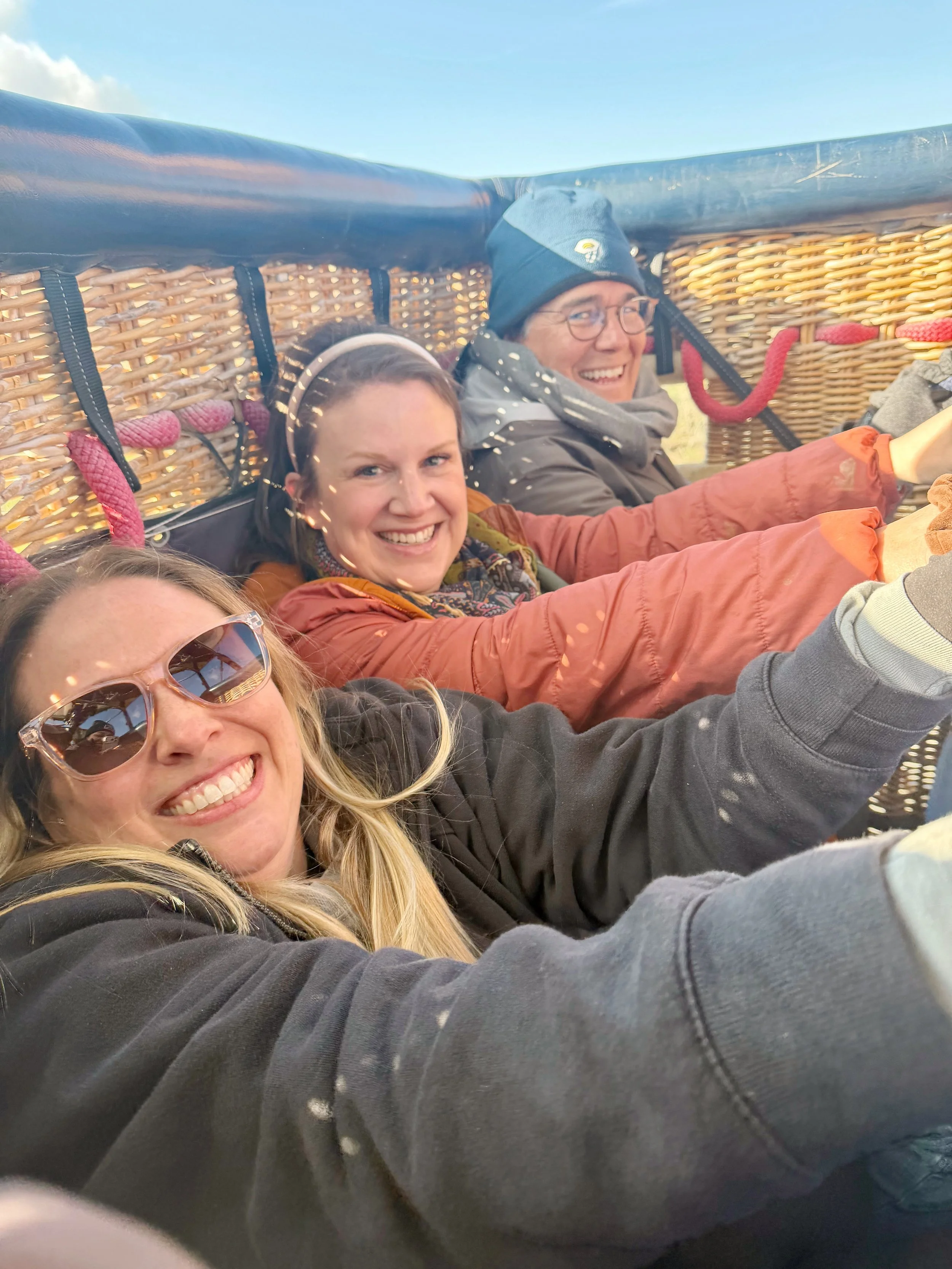
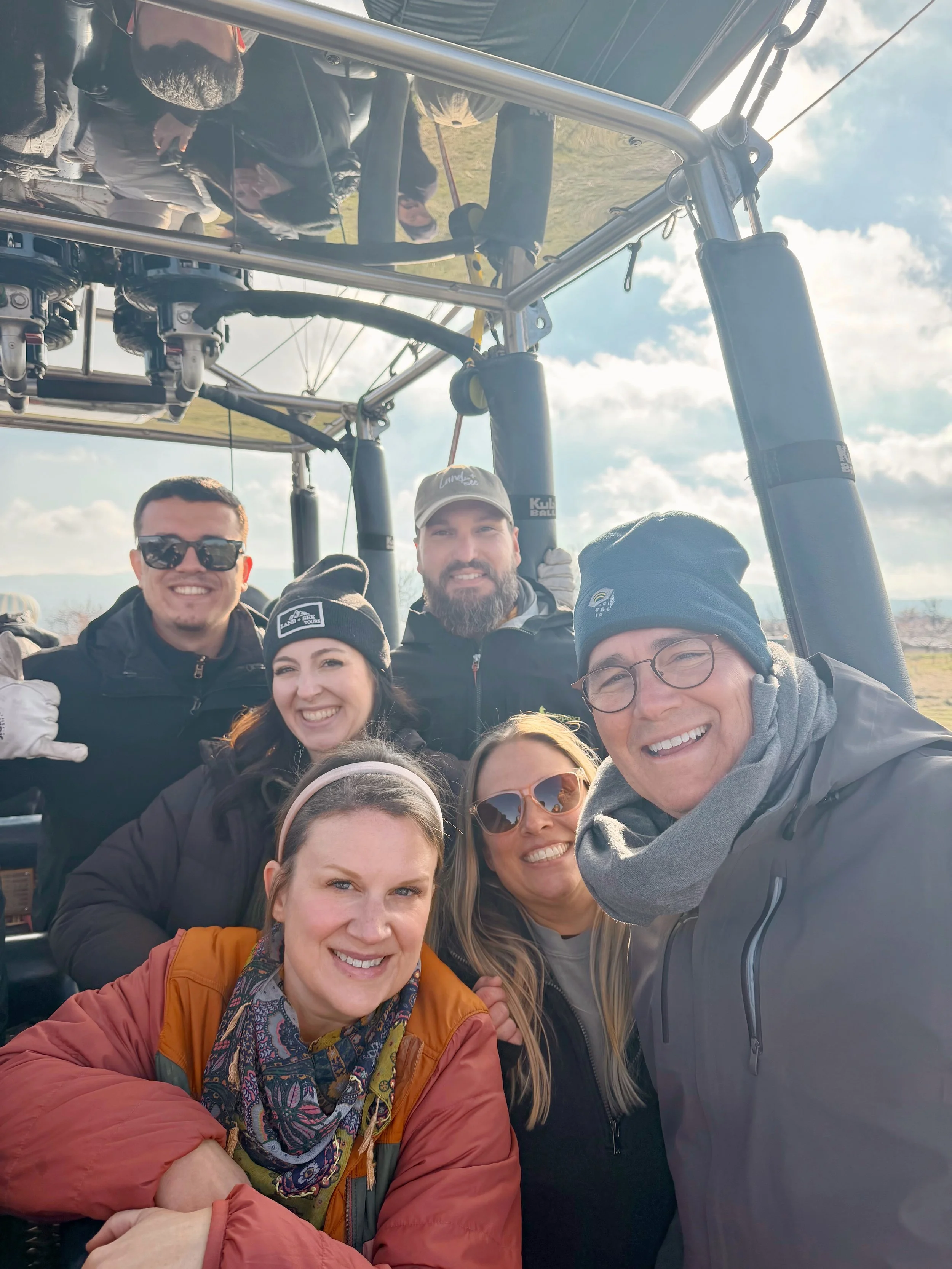
We floated for just over an hour, dipping low between rock formations and then climbing high enough to see the entire landscape stretch out. Even those who were nervous about heights said it was worth it. Somehow, it feels calm up there. In a moment that still feels unreal, our pilot turned out to be the son of a pilot we had flown with in the Maasai Mara. Out of hundreds of balloons, on that one morning. It’s one of those small, improbable connections that reminds you how travel weaves things together in ways you can’t plan.
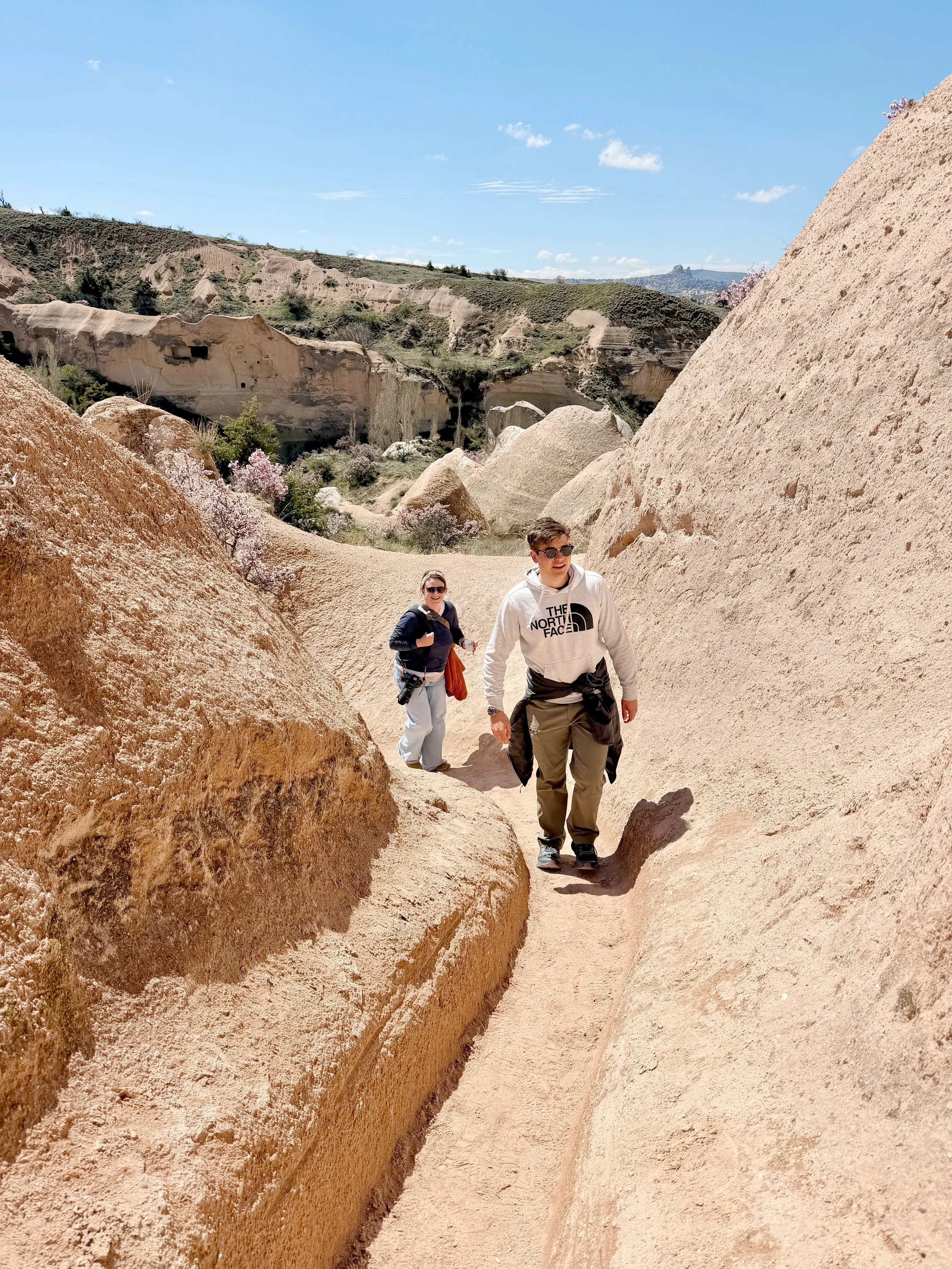
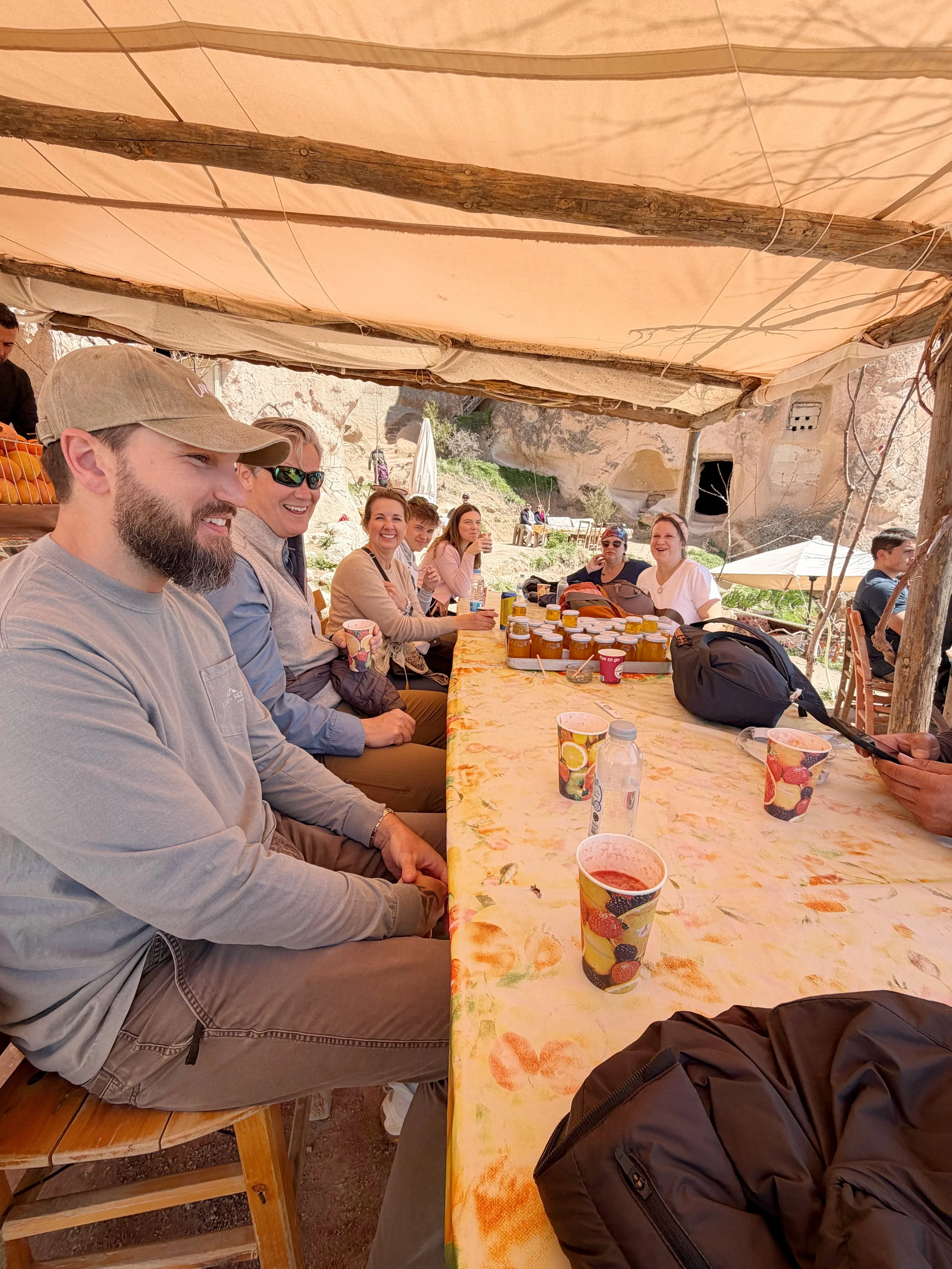
We also took a guided hike through the Red and Rose Valleys with our guide, Hami. It was about five kilometers, mostly downhill, winding through changing colors and textures in the rock. At one point we stopped for fresh orange and pomegranate juice from a vendor who rides in each day on a motorbike loaded with supplies. It was simple and perfect in that moment, the kind of thing you don’t think much about until later when it becomes one of the clearest memories.
Cappadocia takes a little effort to get to. It’s a connecting flight from Istanbul or a long drive, and it would be easy to talk yourself out of it. But that extra step is part of what makes it feel the way it does. It’s not just the landscapes or the activities. It’s the feeling of being somewhere that still holds onto its stories, where things move at a slightly different pace, where moments stay with you longer than expected.
For those of you who were there with us, you know exactly what this feels like. And for anyone thinking about going, it’s worth it. More than worth it.